Tseax Cone, Volcanic cone in British Columbia, Canada
Tseax Cone is a roughly circular volcanic cone with a low, broad profile, rising to 609 metres in the Nass Ranges. Its centre is a shallow basin of grey and brown loose rock and pale bare earth, encircled by a raised rim of dark grey to black hardened rock cut by gullies and slumps. A whitish band of exposed material rings the outer base, where sparse green trees grow on the lower slopes and within the depression. The cone is surrounded by dense forest.
Radiocarbon dating of plants killed by the volcano gives ages from 625 ± 70 to 190 ± 15 years, and most research, including data reported in 2020, supports a single eruptive episode. That eruption produced four lava flows; one travelled 11 km north to the Nass River and then 10 km along its valley floor, making the flow about 22.5 km long. Nisga'a accounts describe the destruction of two villages and the deaths of about 2,000 people from volcanic gases.
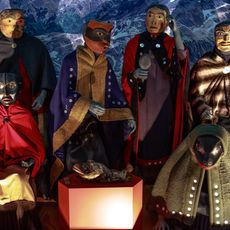
The Nisga'a name for the cone, Wil Ksi Bax̱hl Mihl, means 'Where the Fire Ran Out'. Their oral accounts describe a long period of disruption, the destruction of two villages and about 2,000 deaths from volcanic gases and poisonous smoke. The lava beds, rising up to 12 m above the road in places, are regarded as the burial ground of those people. It is the only eruption in Canada whose First Nations legends have been verified.
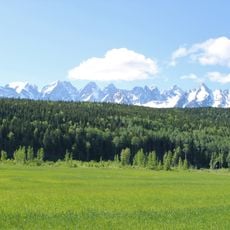
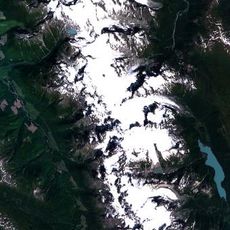
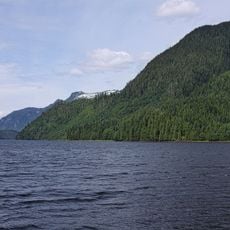
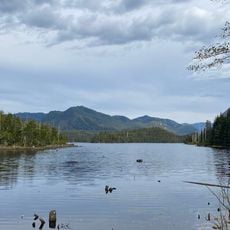
Tseax Cone lies about 60 km north of Terrace, at the outlet of Melita Lake where Crater Creek flows west into the Tseax River. Provincial highways and backcountry roads give access to the cone and its lava flows, which reach 12 m above the road in places. The area is wetter than the rest of the Nass Ranges because Pacific air arrives over the Skeena valley and Kitimat Ranges, bringing cloud and heavy rain; short spells of extreme cold and deep snow occur when Arctic air pushes in from the north.
The 22.5 km lava flow from Tseax Cone dammed the Tseax River to form Lava Lake and filled 10 km of the flat Nass River valley floor. In the Nass valley the flow left abundant tree casts and lava tubes, holes where hot lava burned out tree trunks. The lava beds, rising 12 m above the road in places, are regarded by the Nisga'a as the burial ground of about 2,000 people killed by volcanic gases.
The community of curious travelers
AroundUs brings together thousands of curated places, local tips, and hidden gems, enriched daily by 92,632 contributors worldwide.