Bear Glacier Provincial Park, Nature reserve in Kitimat-Stikine, Canada
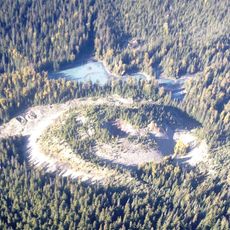
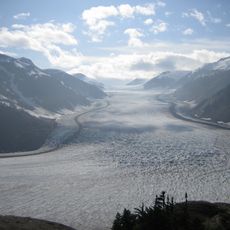
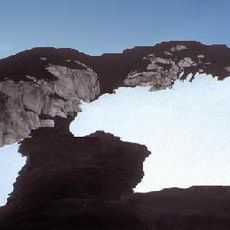
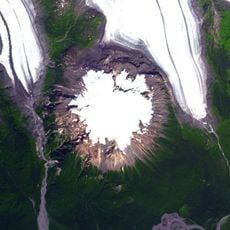
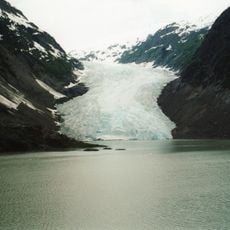
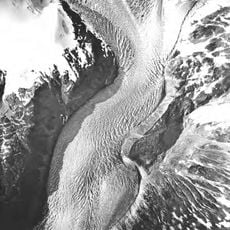
Bear Glacier Provincial Park covers 542 ha in British Columbia, protecting the tongue of the Bear River Glacier and the 1.7 km Strohn Lake it left behind as it retreated. Until the 1940s the ice filled the whole pass; the lake is named after electrical engineer Frank R. Strohn (1866–1952). The park is a Category III protected area in the Engelmann Spruce Subalpine Fir zone.
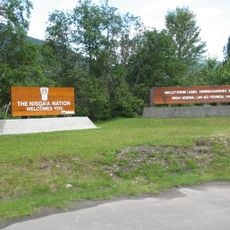
Bear Glacier Provincial Park was established on 11 May 2000 under Appendix G-3 of the Nisga'a Treaty, the agreement that set out Nisga'a land rights and resource management in this part of northwestern British Columbia. Until the 1940s the glacier filled the whole pass; its retreat then formed Strohn Lake, about 1.7 km long, named for the electrical engineer Frank R. Strohn (1866–1952). Between 1958 and 1962 the lake drained five times through a tunnel that opened briefly beneath the ice dam, and in 1967 the glacier had melted back enough for the lake to flow out freely.
The park lies within the traditional territory of the Nisga'a, whose treaty with Canada and British Columbia, signed in 2000, created it. The glacier's retreat since the 1940s left Strohn Lake, about 1.7 km long, named after electrical engineer Frank R. Strohn (1866–1952).
The glacier is easily visible from Highway 37A between Meziadin Junction and Stewart, which has several pullout areas for viewing. The best vantage points are accessible directly from the road without needing long hikes into the backcountry.
The lower section of the glacier served as a filming location for scenes in the movie Insomnia starring Al Pacino. This connection to a well-known film makes the location particularly memorable for cinema enthusiasts.
The community of curious travelers
AroundUs brings together thousands of curated places, local tips, and hidden gems, enriched daily by 94,120 contributors worldwide.