Chilkoot Pass, Mountain pass at Canada-Alaska border, British Columbia
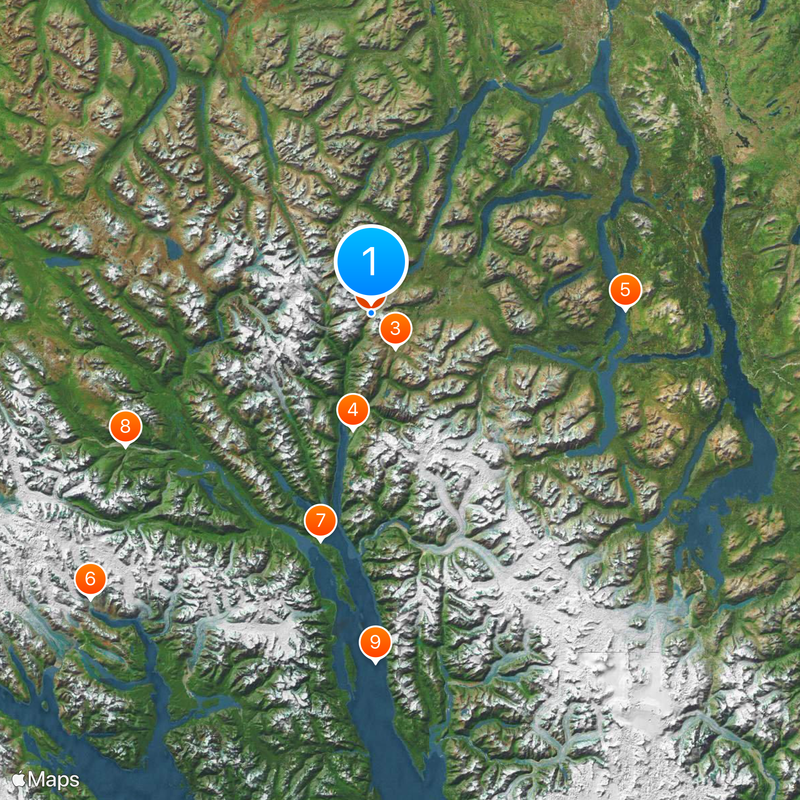
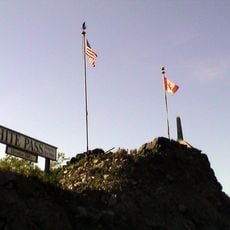
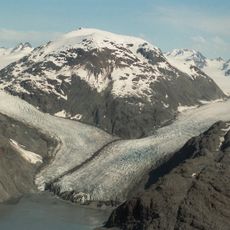
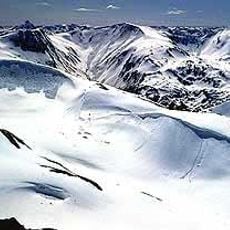
Chilkoot Pass is a mountain pass on the Canada-Alaska border in British Columbia, reaching an elevation of about 1,067 meters. It forms part of the international boundary and connects the two regions across a steep mountain route.
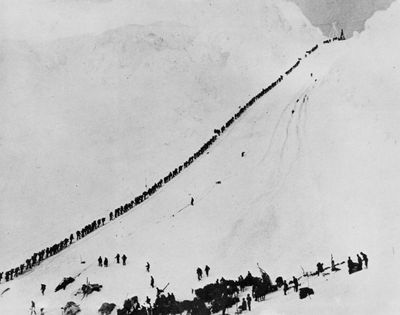
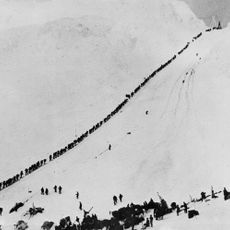
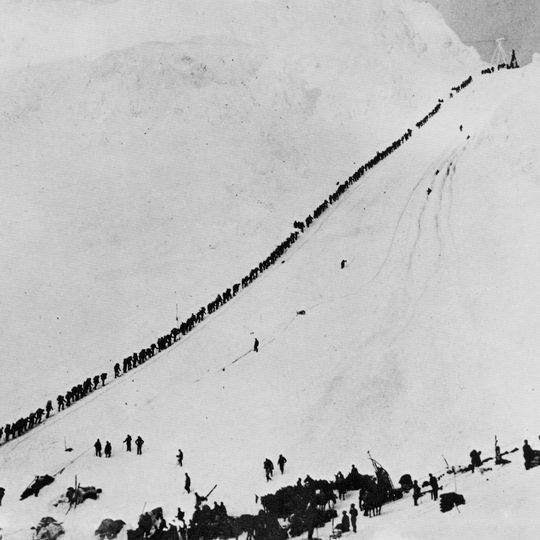
The Chilkoot Trail was a Tlingit trade route over the pass long before 1882, when Berlin teacher Arthur Krause became the first scientific traveller to cross it. Between 1897 and 1899 more than 100,000 stampeders climbed the pass toward Lake Bennett; Canadian officials at the summit required each to show a year's provisions, nearly a ton carried in relays. The route lost its traffic once the White Pass and Yukon railway opened next door, and the trail entered the US National Register of Historic Places on 14 April 1975 and became a Canadian National Historic Site on 20 November 1987.
The name "Chilkoot" derives from "Chilkat", a Tlingit group. The trail was a Tlingit trade route long before 1870, when George Holt became the first non-Indigenous person to cross; the Berlin teacher Arthur Krause followed on 28 May 1882. Packers on the gold rush route were mainly Alaska Natives and First Nations people, charging one cent per pound carried.
Hikers must register and pay a fee before walking the 33-mile trail from Dyea to Bennett Lake. The route climbs about 900 feet to the Scales, where packs were once reweighed, then 500 to 600 feet over roughly half a mile of sharp rock slabs. In winter, ice steps were cut single-file; summer footing often forces hands onto the rock.
During the gold rush, hundreds of steps were carved into the pass's ice to create a pathway for prospectors. These stairs enabled thousands to traverse the steep route in single file.
The community of curious travelers
AroundUs brings together thousands of curated places, local tips, and hidden gems, enriched daily by 92,638 contributors worldwide.