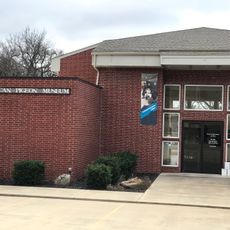
Guthrie Historic District, Historic district in downtown Guthrie, Oklahoma, United States.
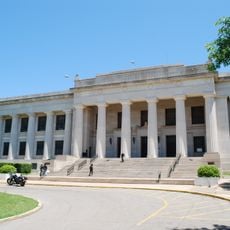
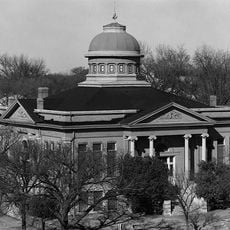
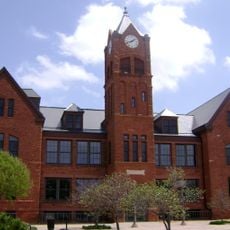
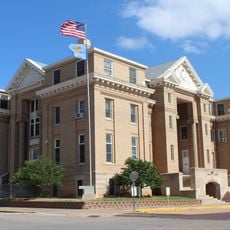
The Guthrie Historic District is a downtown area with over 100 buildings dating from around 1890 to 1910, displaying various architectural styles including Late Victorian, Italianate, Romanesque, and Beaux Arts. The structures are primarily built from brick and stone and continue to define the character of the city center today.
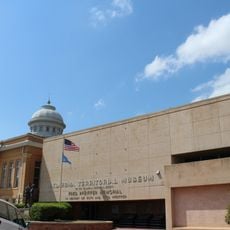
After the 1889 Land Run, the settlement grew from tents into a brick and stone city within months, reflecting rapid economic development in the territory. The place served briefly as the capital of the territory and later the state of Oklahoma before government functions moved to Oklahoma City in 1910.
The buildings reflect settlers' preference for ornate architecture and grand constructions that showed their prosperity and ambition in a new territory. Today these structures reveal how quickly a new community wanted to establish its own identity.
The district covers about 31 acres, bounded roughly by Oklahoma Avenue, Broad Street, Harrison Avenue and the railroad tracks; the Logan County Courthouse at 301 E. Harrison Avenue stands outside the main boundaries. Walking is the way to see it, and the route is compact enough to cover in a single visit.
The district's period of significance is 1889 to 1910, and its 1998 National Historic Landmark nomination counted 112 resources: 69 contributing buildings, 38 non-contributing buildings, one non-contributing structure and three non-contributing objects. It was declared a National Historic Landmark in 1999 as the first capital of the Oklahoma Territory and of Oklahoma.
The community of curious travelers
AroundUs brings together thousands of curated places, local tips, and hidden gems, enriched daily by 94,498 contributors worldwide.