National Cowboy & Western Heritage Museum, Western art museum in Oklahoma City, United States
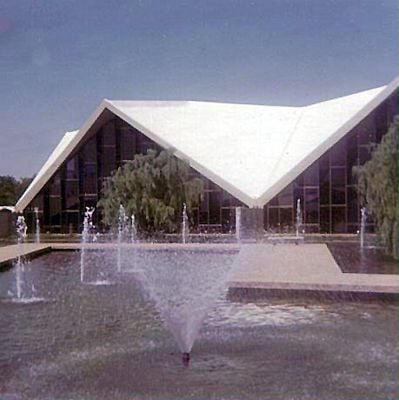
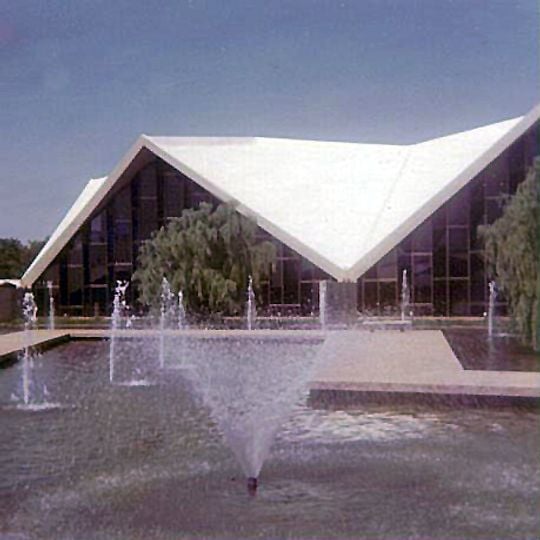
The National Cowboy & Western Heritage Museum in Oklahoma City holds more than 28,000 Western and American Indian artworks and artifacts, including over 200 paintings by Charles M. Russell and Frederic Remington and James Earle Fraser's large plaster sculpture End of the Trail. Its 200,000 square feet of galleries include a recreated 1950s rodeo arena and Prosperity Junction, a 14,000-square-foot indoor turn-of-the-century prairie town. The building has a wide white roof of two sloped planes meeting at a central peak, dark glass panels below, and a fountain with several water jets in front.
Chester A. Reynolds proposed the museum, founded in 1955 as the Cowboy Hall of Fame and Museum; the name changed that same year to the National Cowboy Hall of Fame and Museum, and again in 1960 to the National Cowboy Hall of Fame and Western Heritage Center. The American Alliance of Museums granted full accreditation in 2000, when the museum took its present name. The Chester A. Reynolds Memorial Award honours its founder.
The name honors both the cowboy heritage and the history of Native peoples, visible in galleries through paintings, sculptures and personal belongings. Visitors see original saddles, clothing and tools that show how people lived and worked in the West.
The hallways are wide and the building has elevators, making all floors accessible. A visit usually takes two to three hours, depending on how much time one spends in the individual galleries.
Prosperity Junction is a complete replica of a Western town around 1900, located entirely indoors. Visitors can walk through streets with wooden houses, a store and a blacksmith shop and imagine what life on the prairie looked like.
The community of curious travelers
AroundUs brings together thousands of curated places, local tips, and hidden gems, enriched daily by 92,634 contributors worldwide.