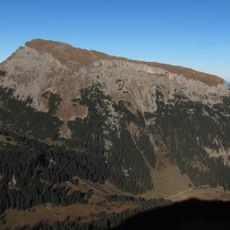
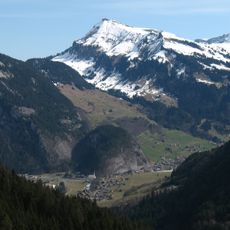
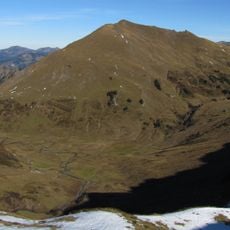
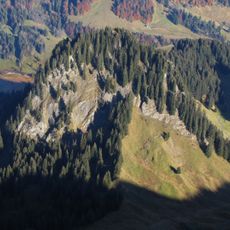
Schneckenlochhoehle, Limestone cave in Vorarlberg, Austria.
Schneckenlochhoehle is a limestone cave in Vorarlberg that extends for 3500 meters through rock formations with numerous passages. These tunnels follow the geological boundaries of the Helvetikum rock series and create a complex underground network.
The cave was first documented in a newspaper article around 1900 and officially recognized as a geological natural monument in 1955. This designation marked the site's importance for scientific research and protection of the underground landscape.
The name Schneckenloch ("snail hole") refers to the winding, spiralling course of the passages. Near the entrance, information boards show a sketch of the cave layout. The cave is probably the best known in Vorarlberg, and the portal can be seen from Schönenbach.
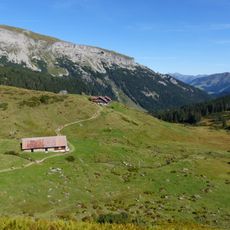
The cave entrance at 1270 m is visible from Schönenbach and reached in about 1.5 hours on foot; the trail is partly steep and rough. Allow 2.5 to 3 hours for the main passages, which are entered only with a guide and full caving gear; some links must be crawled on all fours. Access is closed from 1 October to 31 March to protect bats, and the approach lies in a wildlife rest zone.
The cave serves as a winter shelter for bat species such as Myotis myotis and Myotis daubentonii during cold months. This makes seasonal access restrictions necessary to protect the roosting animals from disturbance.
The community of curious travelers
AroundUs brings together thousands of curated places, local tips, and hidden gems, enriched daily by 93,560 contributors worldwide.