Shusha Cave camp, Stone Age cave in Shusha District, Azerbaijan.
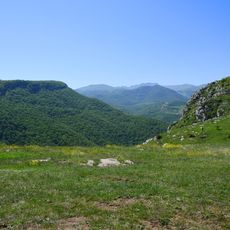
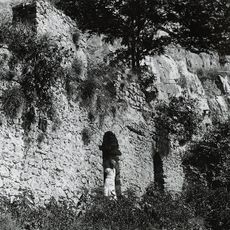
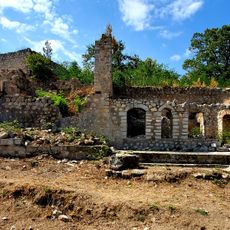
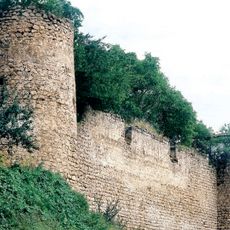
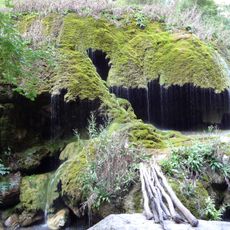
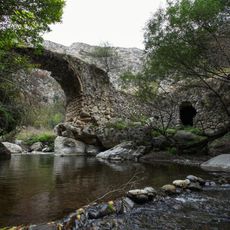
Shusha Cave camp is a cave on the left bank of the Dashalty River, 80 metres above the stream and 1,400–1,500 metres above sea level, beneath the Jydyr Duzu cliff south of Shusha. It is 120 metres long, up to 20 metres wide and 7 metres high, cut into marbleised limestone. Remains of thick stone fortification walls stand at its entrance.
The cave shows evidence of Stone Age habitation with numerous tools and artifacts discovered within its chambers. These findings suggest that early people used the site as shelter.
The cave's name comes from its position near Shusha. In 1971, before excavation, some locals believed the cave had no end, while others considered it a sacred place. Archaeologists also found thick stone fortifications and remains of fortress walls at the entrance, and a spring of drinking water nearby.
Access requires permission from local authorities and appropriate hiking gear for the steep approach to the cave entrance. Visitors should wear sturdy footwear and be prepared for uneven terrain.
In 1939, the Megeli horseshoe bat was found in Shusha Cave, the first record of this species in the USSR. The cave also holds the remains of medieval stone fortifications at its entrance, and two crude Paleolithic choppers were found at a depth of 2 metres.
The community of curious travelers
AroundUs brings together thousands of curated places, local tips, and hidden gems, enriched daily by 95,137 contributors worldwide.