Damjili Cave, Prehistoric cave in Gazakh District, Azerbaijan.
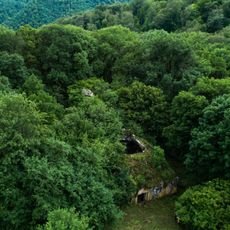
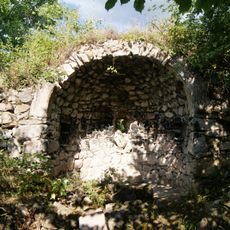
Damjili is the largest cave on Avey Mountain, a half-circular limestone shelter with a rear wall 4 m high and a floor area of 360 m²; its front section has collapsed through flooding. Water seeps through natural cracks in the rock and drips down, feeding the spring that gives the cave its name.
The cave shows signs of human activity stretching from the Middle Paleolithic period through the Bronze Age. Archaeological work in the 1950s documented this extended human presence through layers of stone and bone remains.
The name Damjili comes from the Azerbaijani word damcı, "drop", for the water that seeps through cracks in the limestone and collects in a spring below. Excavations in 2015–2017 by a team led by Yoshihiro Nishiaki of Tokyo University uncovered traces of ochre in the cave, suggesting the occupants used pigment, possibly for symbolic purposes.
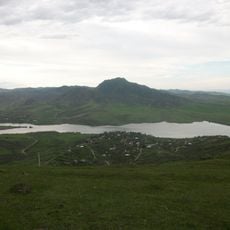
The cave lies on the south-eastern slope of Avey Mountain, above the stretch from Daş Salahlı village toward the Khram River. Its front section has collapsed through flooding, so the shelter is open at the front and 4 m high at the rear. Excavations reached a depth of 4 m, and the deposits are stratified, so the floor is uneven.
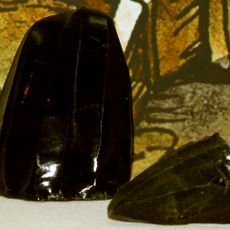
Excavations uncovered tools made from flint and obsidian, showing that both Neanderthals and early modern humans lived at this location. This mix of different tool styles in one place offers archaeologists unusual insight into how populations may have overlapped.
The community of curious travelers
AroundUs brings together thousands of curated places, local tips, and hidden gems, enriched daily by 94,353 contributors worldwide.