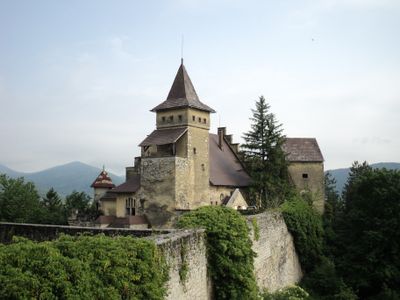
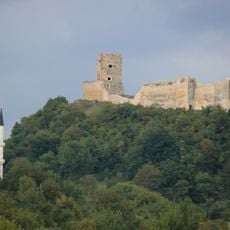
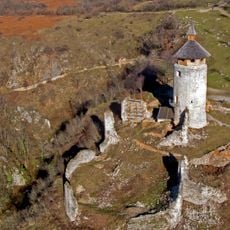
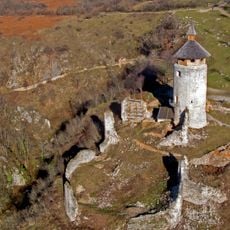
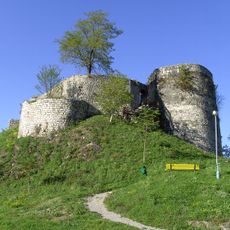
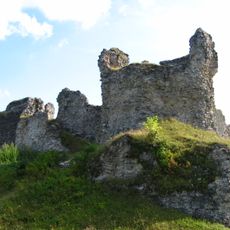
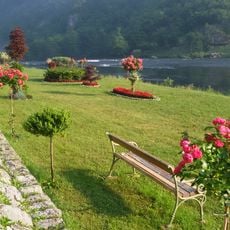
Ostrožac Castle, Medieval fortress in Ostrožac, Bosnia and Herzegovina.
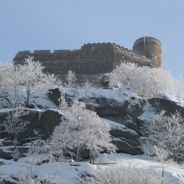
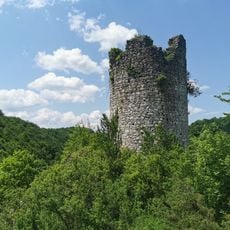
Ostrožac Castle is a medieval fortress in Ostrožac built to command the valley and protect the region from invaders, with a layout designed around its hilltop position. Multiple defensive walls and towers are arranged to control the surrounding terrain and the river below.
The fortress was founded in the 13th century by the Babonić family and served as a border stronghold for medieval rulers. In 1579 it fell under Ottoman control, shifting its role in the region's politics and defense.
The fortress blends medieval European fortification methods with Ottoman design elements, showing how different cultures shaped the region over time. Visitors can see this fusion of building styles directly in the walls and structures.
Wear sturdy shoes and check the weather before visiting, as the climb to the castle is steep and conditions can change. Most visitors spend around one hour exploring the site at their own pace.
The castle courtyard holds over 150 stone sculptures created during an annual sculptors' workshop. These artworks turn the historical grounds into an open-air gallery where visitors can discover contemporary creations.
Location: Ostrožac
Inception: 16 century
Architectural style: medieval architecture, Ottoman architecture
GPS coordinates: 44.90400,15.93700
Latest update: December 6, 2025 17:41
From the Baltic to the Black Sea, fortresses and castles define the landscape of Eastern Europe. These structures reflect military architecture from the Middle Ages through the Renaissance, displaying different defensive techniques and regional traditions. Some were built as border strongholds, others controlled trade routes or served as power centers for local rulers. Khotyn Fortress on the banks of the Dniester in Ukraine stands among the region's most significant defensive works. In Poland, Malbork Castle documents the power of the Teutonic Order, while Hermann Fortress in Estonia and Novgorod Kremlin in Russia marked strategic points in Baltic and Russian defense systems. Further south, Golubac Fortress guards the Danube at the Iron Gates, and Baba Vida Fortress in Bulgaria ranks among the Balkans' preserved medieval compounds. Many of these sites now function as museums or archaeological locations. The ruins of Strečno Castle in Slovakia overlook the Váh Valley, while Bran Castle in Romania draws visitors through its association with Dracula lore. These fortifications document centuries of military and political history across Eastern Europe.
Plitvice Lakes National Park
25.4 km
Korenica
25.5 km
Štrbački buk
28.2 km
Veliki slap
25.9 km
Caves of Barać
18.8 km
Sokolačka Fortress
13.6 km
Drežnik Castle
21 km
Drežnik Grad
21.9 km
Grabovac, Rakovica
22.3 km
Kordunski Ljeskovac
17.2 km
Krupa Castle
17.3 km
Bužim Castle
17.7 km
Bjelopolje
27.1 km
Smoljanac
23 km
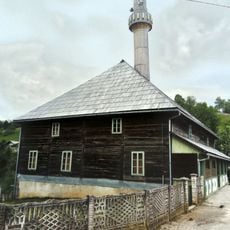
Old wooden mosque in Bužim
17.5 km
Čatrnja, Rakovica
23.5 km
Turbe Mausoleum (Bihać)
11.4 km
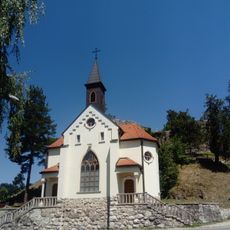
The Name of Mary Church, Bosanska Krupa
17.3 km
Plitvički Ljeskovac
27.3 km
Mariä-Geburt-Kirche (Bosanska Krupa)
17.3 km
Crkva sv. Jelene u Rakovici
25.1 km
Vrpile
28 km
Nişans de la famille Kajtezović
17.1 km
Štefanijin otok
25.5 km
Kapela Korenička
23.5 km
Furjan Fortress
26 km
Galovački buk
26.1 km
Una Mamea Park
28.3 kmVisited this place? Tap the stars to rate it and share your experience / photos with the community! Try now! You can cancel it anytime.
Discover hidden gems everywhere you go!
From secret cafés to breathtaking viewpoints, skip the crowded tourist spots and find places that match your style. Our app makes it easy with voice search, smart filtering, route optimization, and insider tips from travelers worldwide. Download now for the complete mobile experience.
A unique approach to discovering new places❞
— Le Figaro
All the places worth exploring❞
— France Info
A tailor-made excursion in just a few clicks❞
— 20 Minutes