Zyklopensteine, Natural monument and blockfield near Aachen, Germany and Raeren, Belgium
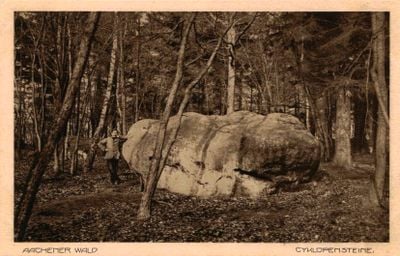
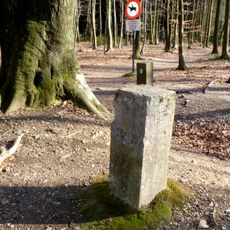
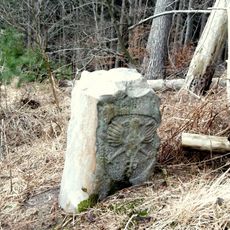
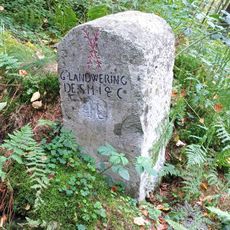
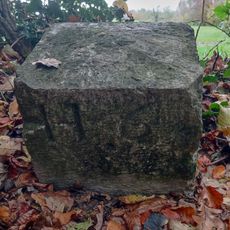
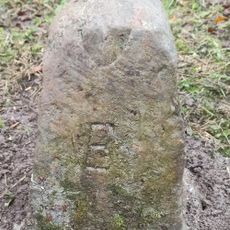
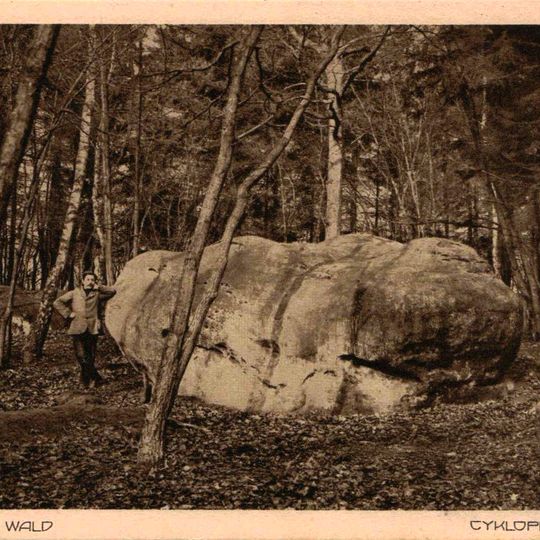
The Zyklopensteine are a group of about fifty blocks of silicified sandstone and quartzite, of different sizes, lying on roughly one hectare of the Aachener Wald a few metres south of the German-Belgian border, mostly in the municipality of Raeren. The Aachener Landgraben cuts through the site, and some blocks lie on German soil. The blocks are the eroded remains of Tertiary quartzite formed in Aachen sand.
The site received official protection status on July 6, 1998, when it was designated part of Belgium's German-speaking Community's protected landscapes. This recognition marked the growing appreciation of the location's geological importance to both neighboring regions.
The name Zyklopensteine, or Cyclopean Stones, comes from the size of the blocks, which look as if only giants could have moved them; the sources record no legend attached to the site. The field lies beside the Köpfchen border crossing, where the Belgian N68 meets the German B57, and is a popular destination for walkers. One of the sources of the Geul rises within the area of the stones.
The blocks lie a few metres south of the German-Belgian border, mostly in Raeren, and the Aachener Landgraben ditch cuts through the site. The nearest crossing is the Köpfchen, where the Belgian N68 becomes the German B57; from there marked walking trails lead to the stones. Sturdy shoes help on the uneven, leaf-covered ground.
The boulders formed from loose Upper Cretaceous Aachen sand that solidified through quartz transformation under tropical conditions millions of years ago. This geological process reveals how the landscape was shaped during an era with a radically different climate than today.
The community of curious travelers
AroundUs brings together thousands of curated places, local tips, and hidden gems, enriched daily by 93,807 contributors worldwide.