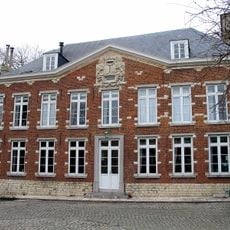
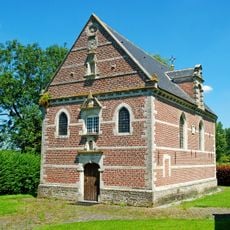
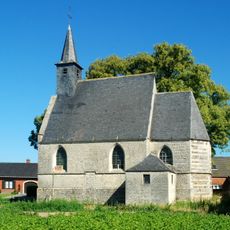
Château Pastur, Town hall in Jodoigne, Belgium.
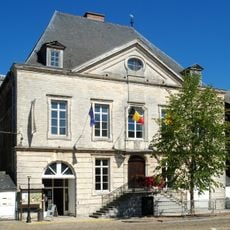
The Château Pastur is built in Gobertange stone on an L-shaped plan, with a classical north wing dated 1730 and a west wing that mixes classical and medieval work. The pale stone facade has a projecting central entrance bay with a dark arched door reached by a broad flight of stone steps, tall rectangular windows in rows, and a triangular pediment with a round window above.
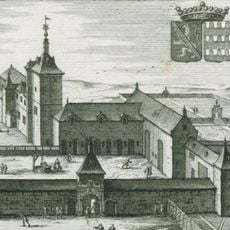
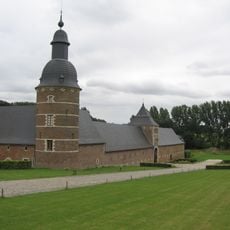
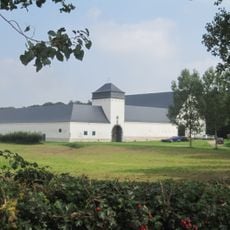
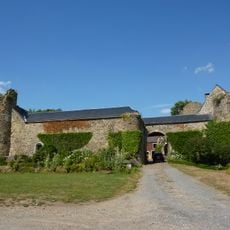
Duke Henri I of Brabant is said to have built a castle here between 1209 and 1229, when the lordship of the county of Duras was attached to Brabant; vestiges apparently survive in the south wing of the stables. That castle was largely destroyed by fire in 1578 during the Eighty Years' War. Édouard de Cocquiel, receiver of the domains of Jodoigne and Hannut, replaced it with a residential building between 1614 and 1623. After Count Jean-Englebert de Romrée acquired it in 1729, it was extensively transformed in 1730, probably under the architect Verreucken.
The name Pastur comes from Philippe-Joseph Pastur, a notary in Lathuy who bought the castle in 1849 from Marquis Théodore d'Yves de Bavay; it stayed with his descendants for five generations. The building later housed a boarding school and a school's head office before becoming Jodoigne's town hall and communal library. The Gobertange stone portal of the surrounding park is a detail to look for.
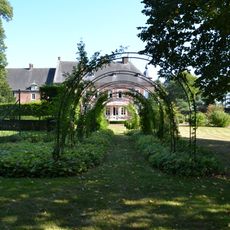
Currently serving as Jodoigne's town hall, the château houses the municipal administration, library, and toy library, remaining accessible to visitors within its enclosed park on Avenue des Déportés in the city center.
The château derives its name from Philippe Pastur, a 19th-century notary who owned the property, reflecting its connection to local notable figures and its evolution from noble residence to administrative center.
The community of curious travelers
AroundUs brings together thousands of curated places, local tips, and hidden gems, enriched daily by 94,582 contributors worldwide.