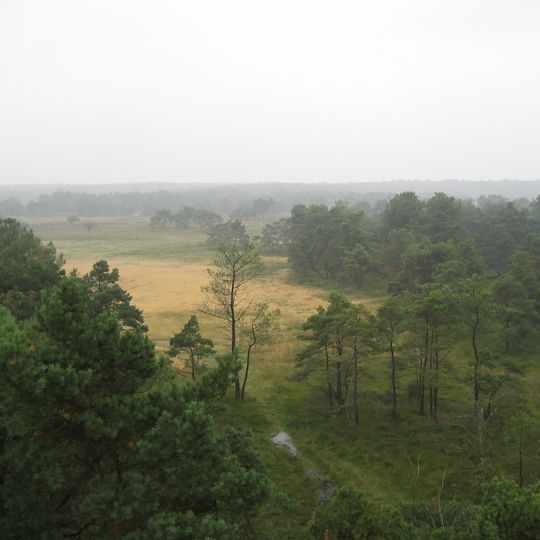
Kalmthout Heath, Nature reserve at Belgian-Dutch border, Belgium
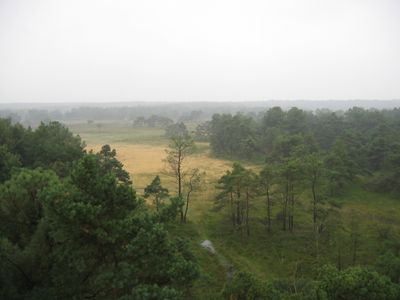
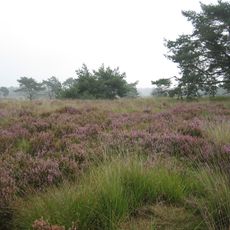
Kalmthout Heath is a nature reserve at the Belgian-Dutch border made up of pine forests, sand dunes, fens, and wetlands. A dense network of marked trails connects these different landscape types throughout the area.
The municipality of Kalmthout owned the heath and in 1911 planned a paved road across it to sell adjoining land for villas; the Vereniging voor Natuur en Stedenschoon campaigned against the plan. The heath was first protected as a landscape on 18 February 1941 for its aesthetic and scientific value, and a petition of over 100,000 signatures led to its status as a state nature reserve, by royal decree in 1968 according to Dutch sources. It was designated a Ramsar wetland in 1984 and a European bird protection zone in 1988.
Heathland here is semi-natural: without human intervention it would disappear under trees. Until 1920 heather sods were cut as fuel and stable bedding; today managers mow and strip the humus-rich topsoil, and sheep, Galloway cattle and Konik horses graze to keep the landscape open. The name comes from the municipality of Kalmthout.
The area offers more than 15 designated hiking routes suitable for both walking and cycling activities. Visitors should prepare for ground conditions that can be muddy or dry depending on the season.
Between June and September the landscape turns purple when marsh heather, Erica tetralix, comes into full bloom. This seasonal transformation is one of the visual highlights of the year and draws photographers and nature lovers.
The community of curious travelers
AroundUs brings together thousands of curated places, local tips, and hidden gems, enriched daily by 95,569 contributors worldwide.