Grand-Place de Louvain-la-Neuve, Central public square in Louvain-la-Neuve, Belgium
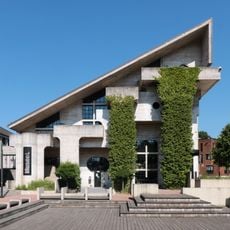
Grand-Place de Louvain-la-Neuve is a central public square surrounded by contemporary buildings that form a rectangular space with a paved floor. The perimeter includes numerous restaurants, cafes, and shops offering services to students, residents, and visitors.
The square's construction began in the 1970s as part of the new university town for the French-speaking Catholic University of Louvain, which moved here after the 1968 Leuven crisis. The first stone of Louvain-la-Neuve was laid on 2 February 1971. The Collège Albert Descamps, by architects Gabriel Epstein and Roger Thirion, was built from 1976 to 1980 and inaugurated in 1981; the Agora auditoriums date from 1977. A second phase at the end of the 1990s and early 2000s completed the square, including the 13-screen cinema built in 2000-2001.
During summer months, the square becomes 'Louvain-la-Plage' with sand installations and recreational activities that draw thousands of visitors from the surrounding region. This seasonal transformation gives the place a different character and brings new life to the space.
The square is easily accessible on foot with multiple entry points allowing comfortable access from different sides. Visitors should know that the area is primarily frequented by students and its character varies depending on the time of day and season.
On 21 May 1985, the last day of his first pastoral visit to Belgium, John Paul II spoke on the square before thousands of people, after stops in Leuven the previous day and before Banneux. The visit came 15 years after the 24 May 1970 law split the Catholic University of Louvain into two universities.
The community of curious travelers
AroundUs brings together thousands of curated places, local tips, and hidden gems, enriched daily by 95,354 contributors worldwide.