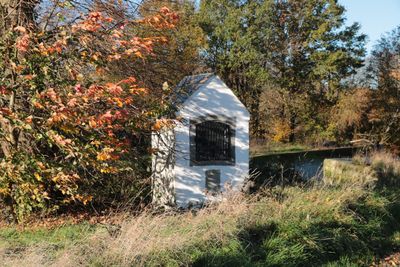
Chapel of Blan T'chfau, Column shrine in Louvain-la-Neuve, Belgium.
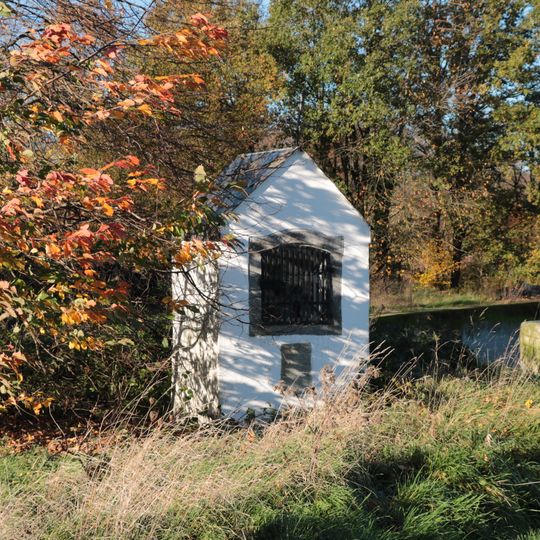
The chapel of Blan T'chfau is a small white-plastered structure with a steep, dark tiled gabled roof. Its front wall holds a large rectangular opening closed by a dark metal grille of vertical bars, framed in grey stone, with a plain grey stone plaque set lower on the same wall. Leafy branches partly hide its left corner, and tall dry grasses grow beside it.
Built around 1732 by farmer Martin Brion, this chapel has historical connections to the Battle of Waterloo in 1815, with local legends linking it to the Napoleonic conflicts that took place on the nearby Lauzelle plateau.
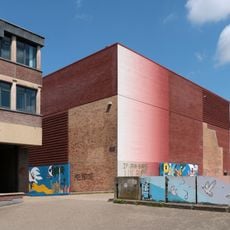
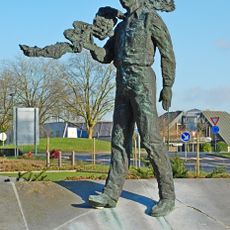
Since 2000 the Collège du Biéreau and its teachers have staged a carnival of the Blan T'chfau to keep the legend alive. Girls dressed as white mares are sponsored by boys dressed as Grognards, Napoleon's soldiers; the procession, led by Ivon the roadman, halts at the place des Wallons for the reading of the legend and ends with a straw horse set alight to drive out winter.
The chapel stands along rue Arthur Hardy, about a hundred metres west of the Lauzelle farm and close to the chaussée de Namur (N4) north of Louvain-la-Neuve. It sits under trees beside tall dry grasses, so the white facade and grille are easy to miss from the road. The 1997 restoration returned the limestone plaque to the facade.
The name Blan T'chfau means white horse in Walloon dialect, derived from a local legend about a poor girl transformed into a white mare who supposedly caught Napoleon's attention during his military campaigns.
The community of curious travelers
AroundUs brings together thousands of curated places, local tips, and hidden gems, enriched daily by 95,331 contributors worldwide.