Deux Balés National Park, National park in Mouhoun region, Burkina Faso.
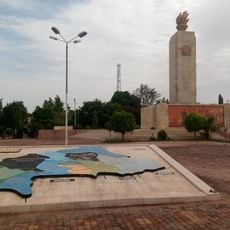
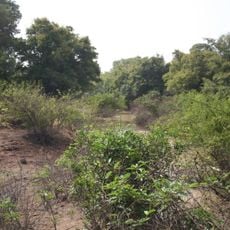
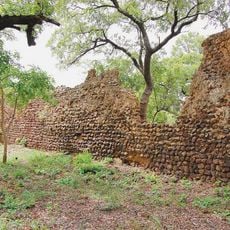
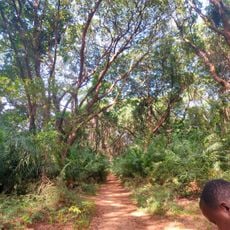
Deux Balés National Park covers a rolling granite landscape dotted with rock formations, plateaus, and forests that line the riverbanks. The variety of terrain and vegetation creates distinct habitats across the protected area.
The area began as a protected forest in 1937 and became a national park in 1967 following Burkina Faso's independence. This transformation marked a shift toward dedicated wildlife and landscape conservation.
The park's name, "Deux Balés", refers to two balés, the local term for laterite outcrops or low granite hills that rise from the savanna plain. The surrounding population lives mainly from agriculture and bushmeat hunting; Rod East noted in 1990 that antelope survival here depends on rational wildlife use schemes that recognise bushmeat's importance, since legal protection alone would achieve little.
The park lies in Mouhoun Province, just west of the Black Volta (Mouhoun) River, near Boromo, at 235–310 m elevation. About 100 km of riverbank forest is protected within its boundaries, so the riverside tracks are the surest place to look for hippos and crocodiles. Poaching remains a problem; visitors are advised to move with a local guide.
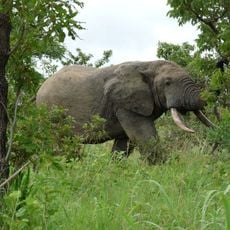
In 2001 Burkina Faso held West Africa's largest elephant population, and about 400 of the animals lived in Deux Balés together with Baporo Forest. The park's legal status is still unsettled: a 1967 declaration renamed it a national park, but no law ever established it as one, and the IUCN recommended reviewing that status in 1989 because farming and mining conflicted with the elephants.
The community of curious travelers
AroundUs brings together thousands of curated places, local tips, and hidden gems, enriched daily by 93,463 contributors worldwide.