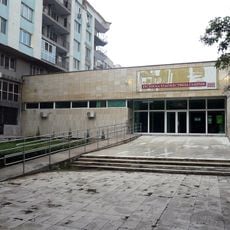
National Transport Museum, National transport museum in Ruse, Bulgaria.
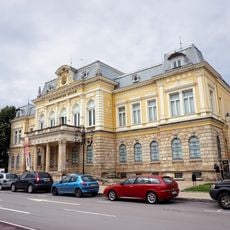
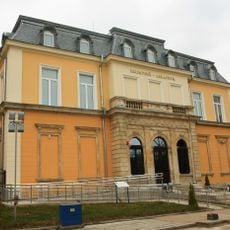
The National Transport Museum occupies Bulgaria's first railway station building and displays locomotives, train cars, and other transport equipment both indoors and outdoors. The collection includes ten steam engines with the oldest from 1868, along with specialized mail transport equipment and various railroad artifacts.
The railway station building was constructed between 1863 and 1866 and served as a key junction on the route connecting London to Istanbul. This line linked Ruse with Varna and made the city an important hub for international rail traffic.
The museum keeps the personal railway saloon carriages of Tsar Ferdinand I and Tsar Boris III, alongside the carriage used by the Turkish sultan for his travels in 1866. These are railway carriages, not road coaches, displayed in the open-air park section among the steam locomotives.
The museum stands on the high Danube bank opposite Giurgiu, in the former Rousse East station, which stopped serving trains in June 1954. Exhibits are split between the old station rooms and an open-air park of locomotives and carriages, so plan for both. The riverside humid air has left the outdoor engines exposed without maintenance since at least 2007.
The station's water tower and river wall were built of white limestone from nearby villages. The museum's rolling stock has appeared in the films Capitan Petko Voivoda, Records of Bulgarian Uprisings and the Russian-Bulgarian production Turkish Gambit.
The community of curious travelers
AroundUs brings together thousands of curated places, local tips, and hidden gems, enriched daily by 93,582 contributors worldwide.