Khan Krum Rock-hewn Monastery, Rock-hewn monastery near Han Krum, Shumen Province, Bulgaria
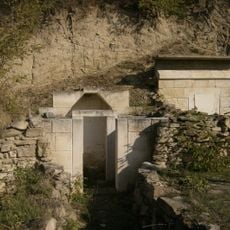
Khan Krum Rock-hewn Monastery is carved into the southeastern rim of the Shumen Plateau, about 360 m above sea level north of Han Krum village. Its main part, the Kalugerova Cave, is reached by a double flight of rock-cut steps and holds three rooms: a 4 by 7 m church with a barrel-vaulted apse and two symmetrical niches, a 3.5 by 4 m narthex, and a roughly 3 by 3 m western room. Across the Kalugerov ravine, Momina Skala shelters the cell called Kiliyata.
The rock-hewn monastery near Han Krum village was part of a complex of rock monasteries, churches and monastic cells inhabited by Hesychast monks in the 12th–14th centuries. It lies on the southeastern edge of the Shumen Plateau at about 360 m above sea level, above the Kalugerov ravine. The main part, the Kalugerova Cave, was cut from natural rock with hard tools.
The monastery demonstrates how medieval monks transformed rock into a place of worship by carving chambers and prayer spaces directly from the stone. This building approach was common in the region and shows how communities shaped their surroundings to serve religious life.
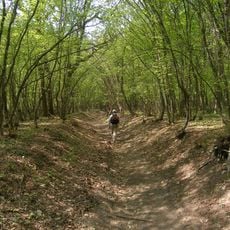
The monastery is reachable via marked paths from the main road, with parking areas at the base of the hiking trail. Visitors should plan for moderate walking and bring appropriate footwear, as paths can be rocky and uneven in places.
The cave is also called Stalbena (Stairway) Cave because access is through steps cut into the rock. The staircase begins eastward, then turns west at a small landing and enters the rock, leaving a natural wall on the left. A wooden roof once stood above the last step at the entrance.
The community of curious travelers
AroundUs brings together thousands of curated places, local tips, and hidden gems, enriched daily by 94,391 contributors worldwide.