Patleyna monastery, Orthodox monastery ruins in Shumen Province, Bulgaria
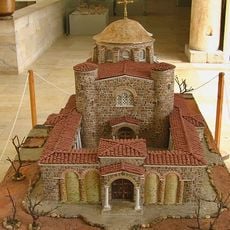
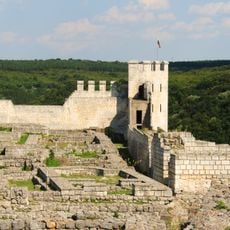
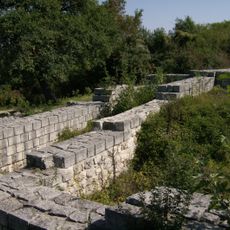
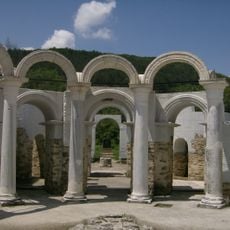
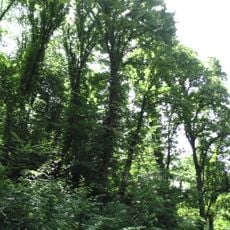
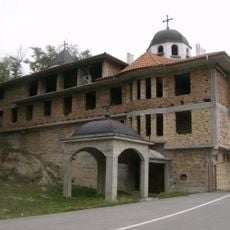
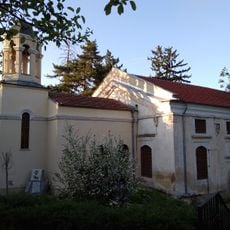
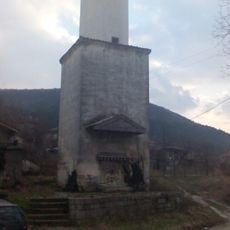
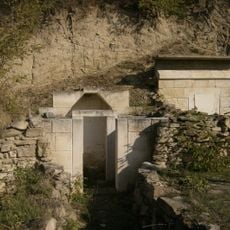
Patleyna Monastery is a ruined complex on a narrow terrace at the foot of a steep, wooded slope above the Golyama Kamchiya River. Its cross-domed church, 12.60 m long with a narthex and one apse, was later enlarged with two lateral apses and two rectangular rooms on the west. Three courtyards held monks' cells, storerooms and ceramic and glass workshops.
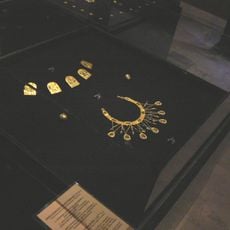
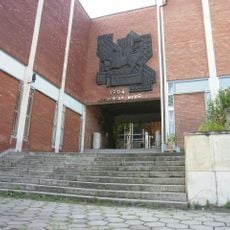
Founded in the 9th century under Boris I after Bulgaria's Christianization, the monastery became a leading centre of the Preslav Literary School, where Clement of Ohrid and Naum of Preslav are said to have worked. Byzantine forces destroyed it in 971 when they seized Preslav, and Pechenegs and Cumans plundered it repeatedly in the 11th and 12th centuries. Excavations in 1909–1914 uncovered a 10th-century ceramic icon of Saint Theodore Stratelates, now in the National Archaeological Museum.
The monastery's name passed to the Patleina locality, and its three courtyards separated prayer, monastic living and ceramic production. Two isolated workshops held kilns and a facility for washing the white Preslav clay, used for painted icons such as the 10th-century Saint Theodore Stratelates now in the National Archaeological Museum.
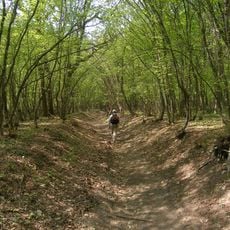
The site sits on a steep mountain slope and is best visited during dry weather when paths and stone steps are safer to navigate. Wear sturdy footwear and allow time to explore the various building areas scattered across the site.
Excavations between 1909 and 1914 uncovered a rare ceramic mosaic icon showing a religious figure, now displayed in a museum collection. This discovery reveals the artistic skill that flourished within the monastery's workshops.
The community of curious travelers
AroundUs brings together thousands of curated places, local tips, and hidden gems, enriched daily by 93,633 contributors worldwide.