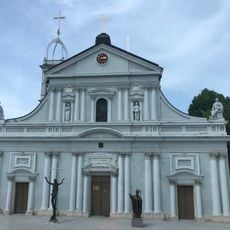
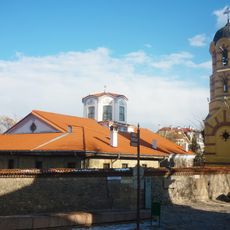
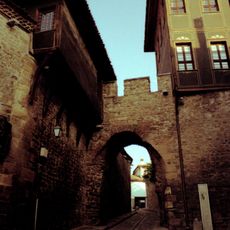
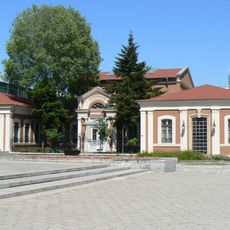
Small Basilica, Archaeological site and museum in central Plovdiv, Bulgaria.
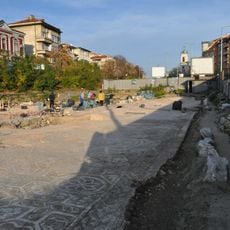
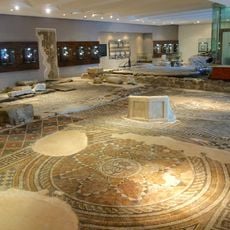
The Small Basilica of Philippopolis is a three-nave early Christian church built in the second half of the 5th century, measuring 20 m by 13 m, with one apse and a narthex. A small chapel stood against its south side and a baptistery with a cruciform pool was attached to the north nave. Its floors carry multicoloured mosaics of triangles, circles, rhombi, meanders, rosettes and Solomon's knots, made by the Philippopolis school.
Built in the second half of the 5th century, the basilica honoured Flavius Basiliscus, the Thracian commander who repelled the Goths from Philippopolis in 471. A six-line mosaic inscription praised him, but after his brief reign as emperor (475–476) was overthrown by Zeno, its first lines were removed. The church later burned down, was rebuilt with a raised brick floor and a new baptistery, and was abandoned by the end of the 6th century. It was rediscovered in 1988 during apartment construction.
The basilica's name distinguishes it from Philippopolis's Great Basilica and the nearby Episcopal Basilica. The mosaics include Solomon's knots, signifying the strength of true faith, and rosettes linked to Paradise and Christ's blood. A six-line donor inscription in red tesserae on white ground, set before the altar, praised the general Flavius Basiliscus.
Visitors can view the mosaics in their original setting, preserved on-site where they were created. Allow time to explore the fine details of the patterns, especially as light hits the surfaces from different angles.
The donor inscription in the altar mosaic praised Flavius Basiliscus for repelling the Goths from Philippopolis in 471. After he was overthrown as emperor in 476, the first lines of the inscription were removed from the mosaic, leaving a visible gap in the red pebbles on white ground.
The community of curious travelers
AroundUs brings together thousands of curated places, local tips, and hidden gems, enriched daily by 94,005 contributors worldwide.