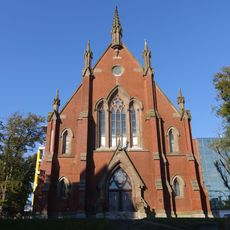
Nova Scotia Museum of Natural History, Natural history museum in downtown Halifax, Canada.
The Nova Scotia Museum of Natural History is a natural history institution in downtown Halifax that features local marine specimens, geological formations, and native wildlife. The exhibits are organized across multiple galleries with interactive displays and extensive collections.
The institution was founded in 1868 as the Provincial Museum and relocated several times before establishing its permanent location on Summer Street in 1970. These moves reflected the growing collection and the institution's expanding role in Halifax's cultural landscape.
The ethnology gallery, still part of the natural history museum, is named Netukulimk after a Mi'kmaq word and reopened with a new concept in June 2011. The museum's roots go back to 1868, when the first museum in Nova Scotia opened showing Mi'kmaq artefacts alongside scientific apparatus, fossils, minerals, animals, paintings and prints.
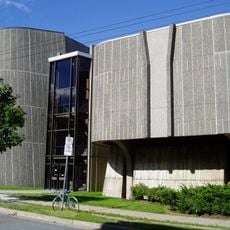
The museum occupies a building at 1747 Summer Street, with six galleries covering archaeology, botany, ethnology, geology, mammals and birds, and marine life. The Nature Lab lets visitors run experiments and follow the museum's projects, and a reference library is on site. The Carbon Arc Cinema screens repertory films in the museum theatre.
Gus, a gopher tortoise, was bought by former curator Donald Crowdis and has lived at the museum for most of his life. The museum marked his 97th birthday on 11 August 2019, making him the oldest known gopher tortoise.
The community of curious travelers
AroundUs brings together thousands of curated places, local tips, and hidden gems, enriched daily by 93,790 contributors worldwide.