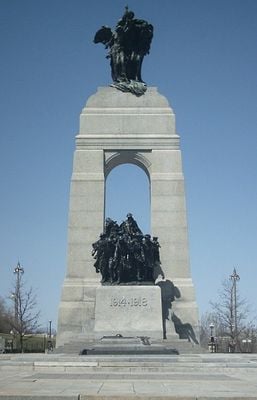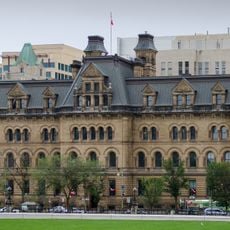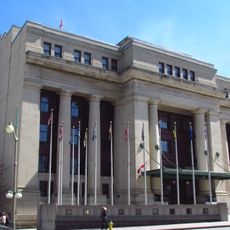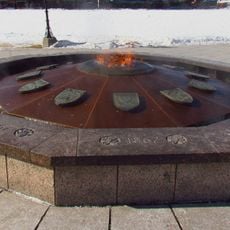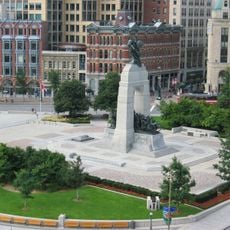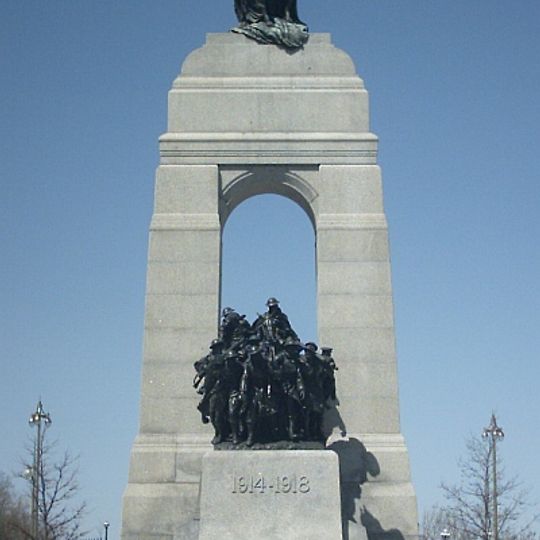
National War Memorial, War memorial in Confederation Square, Ottawa, Canada
A monumental granite arch displays twenty-two life-sized bronze figures of soldiers from various military branches marching through the central opening. Atop the arch stand two winged figures representing Peace and Liberty, watching over the procession below. The sculptural ensemble was designed to convey movement and the progression of Canadian armed forces through various conflicts.
King George VI unveiled the work on May 21, 1939, originally honoring Canadian soldiers who died in the First World War. British sculptor Vernon March won the design competition in 1925 but died before completion, with his siblings continuing the project. In 2000, the Tomb of the Unknown Soldier was added, expanding its scope to encompass all Canadian military conflicts.
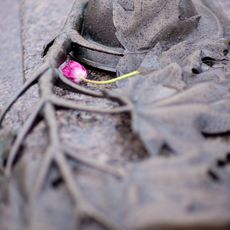
This memorial houses the Tomb of the Unknown Soldier, where people lay poppies each November 11 during remembrance ceremonies. It serves as a national symbol of mourning and gratitude, connecting generations of Canadians in honoring those who fell in military service. The site functions as an active venue for public commemorations and attracts thousands of visitors annually.
An honor guard is present daily from 9 AM to 5 PM, with changing of the guard occurring hourly during summer months. The site is accessible via Rideau metro station on the 95 bus route or by walking from Parliament Hill. Visitors should expect large crowds and barriers on November 11 due to ceremonies.
Construction required 503 tonnes (555 short tons) of rose-grey Canadian granite from Quebec and 32 tonnes (35 short tons) of bronze for the human figures. The stone was quarried at Deschambault, a location known for its high-quality granite deposits. The bronze figures were cast in England at a foundry operated by the March family before being shipped to Canada.
Location: Ottawa
Inception: May 21, 1939
Architects: Vernon March
GPS coordinates: 45.42404,-75.69550
Latest update: November 28, 2025 21:16
Military buildings from different countries demonstrate the evolution of defense structures and command centers across centuries. This collection includes medieval castles, early modern fortifications, barracks, command posts, and contemporary military installations. Each structure documents the military strategies, technological advances, and historical events of its era. The sites range from European fortress systems such as Vauban fortifications in France to Asian defensive walls and American military bases from various periods. Many of these structures played critical roles in wars and conflicts and are now accessible as monuments or museums. They provide insights into military architecture, engineering practices, and the strategic importance of their locations.
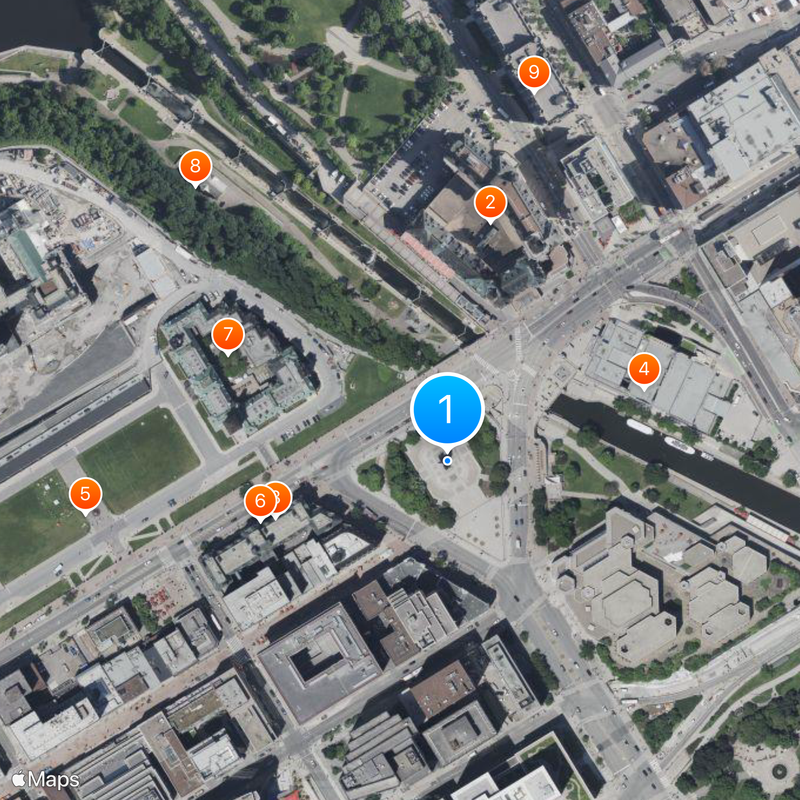
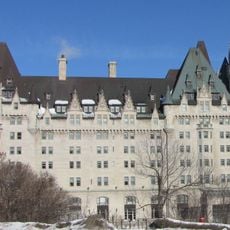
Château Laurier
173 m
Office of the Prime Minister and Privy Council
146 m
Senate of Canada Building
150 m
Centennial Flame
261 m
King's Privy Council for Canada
140 m
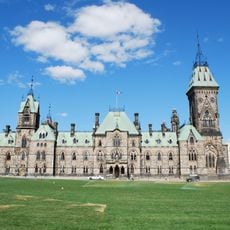
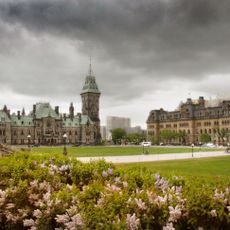
East Block
174 m
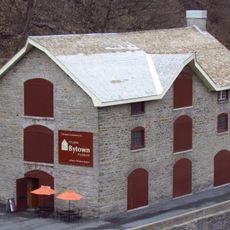
Bytown Museum
266 m
Connaught Building
270 m
Confederation Square
4 m
Monument aux Valeureux
43 m
Russell House
62 m
Portrait Gallery of Canada
280 m
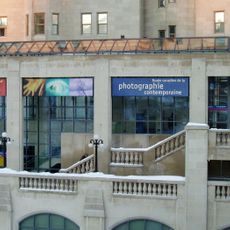
Canadian Museum of Contemporary Photography
119 m
Canadian Tomb of the Unknown Soldier
11 m
National Arts Centre
196 m
Daly Building
225 m
Indigenous Peoples Space
268 m
Thomas D'Arcy McGee Building
172 m
Central Chambers
94 m
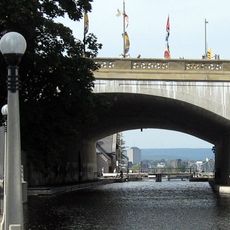
Plaza Bridge
96 m
Transportation Building
250 m
Scottish Ontario Chambers
88 m
Bell Block
86 m
Ottawa Locks
105 m
Public Grounds of the Parliament Buildings
270 m
Saxe Building
140 m
Hope Building
110 m
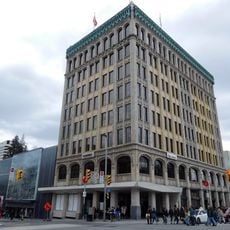
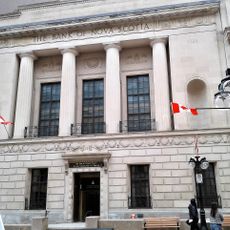
Bank of Nova Scotia Building
280 mReviews
Visited this place? Tap the stars to rate it and share your experience / photos with the community! Try now! You can cancel it anytime.
Discover hidden gems everywhere you go!
From secret cafés to breathtaking viewpoints, skip the crowded tourist spots and find places that match your style. Our app makes it easy with voice search, smart filtering, route optimization, and insider tips from travelers worldwide. Download now for the complete mobile experience.
A unique approach to discovering new places❞
— Le Figaro
All the places worth exploring❞
— France Info
A tailor-made excursion in just a few clicks❞
— 20 Minutes