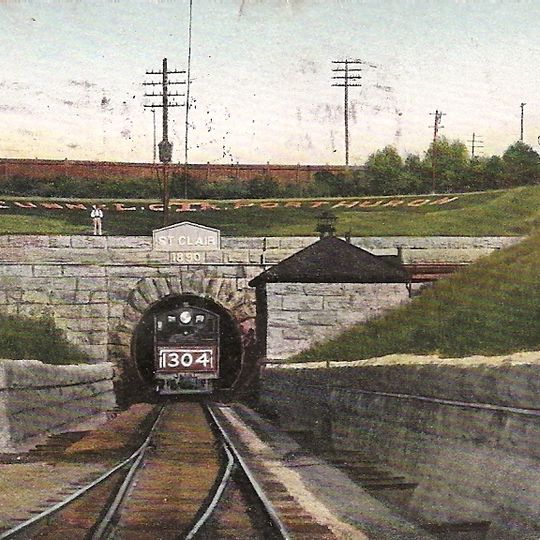
St. Clair Tunnel, International railway tunnel between Sarnia, Canada and Port Huron, United States
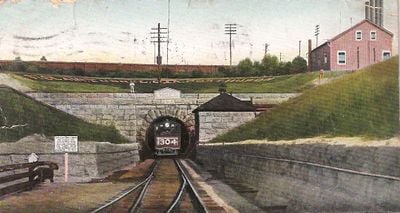
The St. Clair Tunnel is a railway passage beneath the St. Clair River connecting Sarnia, Ontario, to Port Huron, Michigan, running roughly 1.8 kilometers under the riverbed. The modern structure completed in 1994 replaced the original 1800s tunnel and accommodates freight trains carrying double-stacked containers and multi-level vehicle carriers.
The original tunnel was completed in 1891 and became North America's first successful underwater railway tunnel, constructed using cutting-edge shield tunneling technology for the time. The project demonstrated that such ambitious underground engineering was achievable and sparked further development of similar international rail crossings.
The tunnel ended the reliance on rail ferries that once crossed the river, creating a direct land route that became central to North American trade. People on both sides of the border now depend on this crossing for the smooth movement of goods between the two countries.
The tunnel is not open to pedestrians since it remains an active rail line carrying freight trains every day. Visitors can walk along either riverbank to see the entrance structures and learn about the crossing at nearby museums or through historical markers placed in the area.
During construction of the original tunnel in the 1880s, workers received extra pay for working in pressurized air environments and used airlocks to avoid decompression sickness. This hazardous work highlighted the risks early tunnel builders faced while digging beneath the river.
The community of curious travelers
AroundUs brings together thousands of curated places, local tips, and hidden gems, enriched daily by 90,834 contributors worldwide.