Thunder Bay Port Authority, Port authority in Thunder Bay, Canada.
Thunder Bay Port Authority is a port authority created by Canada's Marine Act of 1998, responsible for 56 kilometres of shoreline, 26 km² of shore and 119 km² of water in Thunder Bay, Ontario. It operates as a grain shipping port for Western Canada, with about 85% of cargo tonnage being grain; coal and potash make up most of the rest, and wind turbine supplies are increasingly shipped through it.
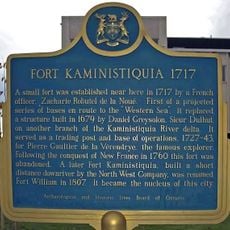
The port's origins lie in the fur trade and French voyageurs of 1678; Fort William was built on the Kaministiquia River in 1805, and a second port at Prince Arthur's Landing, later Port Arthur, followed. The rival communities amalgamated as Thunder Bay in 1969. The Canada Marine Act of 1998 created the Thunder Bay Port Authority as one of 19 economically significant Canadian ports.
The port's working vocabulary comes from the Great Lakes trade: ocean-going vessels are nicknamed "salties" and lake freighters "lakers", a distinction dating from the 1959 opening of the St. Lawrence Seaway. Grain remains the backbone of the harbour, and the automated elevators that speed loading are part of what visitors notice along the waterfront.
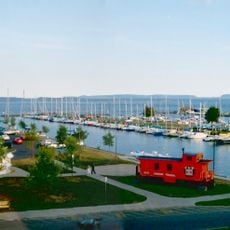
The port can be viewed from observation points where visitors see ships and cargo equipment in operation, especially when large vessels are loading or departing. Activity levels vary by season, with the busiest periods occurring during the main shipping season.
In 1983 the port set its all-time tonnage record: 1,359 vessels carried 22,397,940 tonnes, a peak driven partly by grain shipments to Russia that ended when Canada withdrew loan guarantees that year. In 2019, 429 ships called, 316 domestic and 113 foreign.
The community of curious travelers
AroundUs brings together thousands of curated places, local tips, and hidden gems, enriched daily by 94,440 contributors worldwide.