Blüemlisalp, Mountain massif in the Bernese Alps, Switzerland
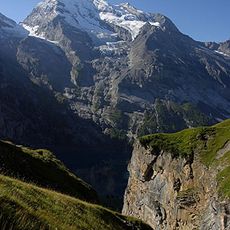
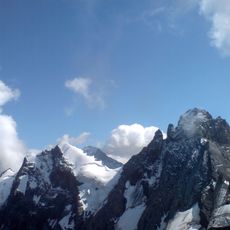
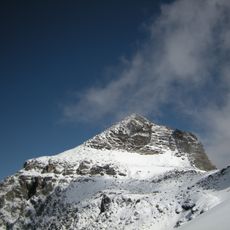
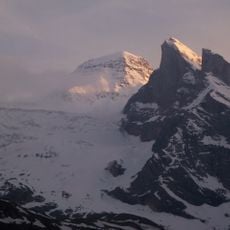
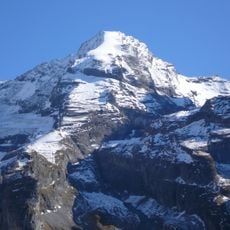
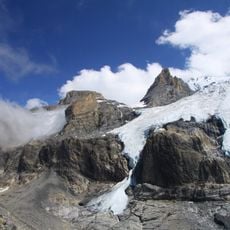
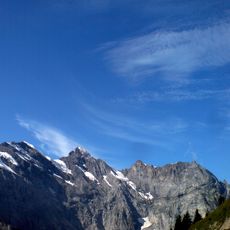
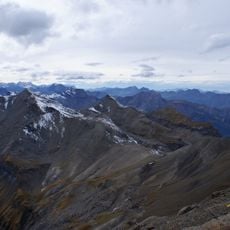
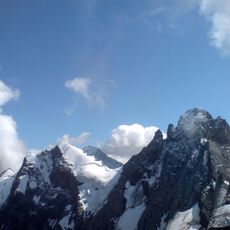
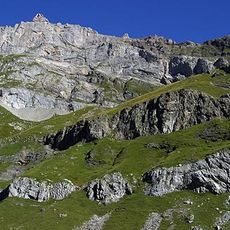
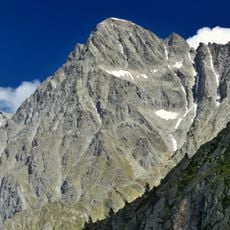
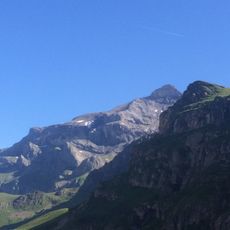
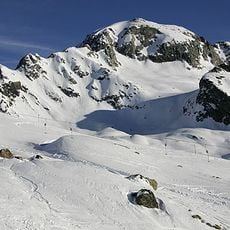
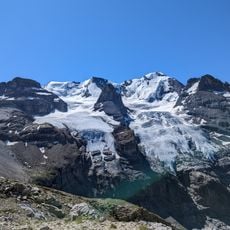
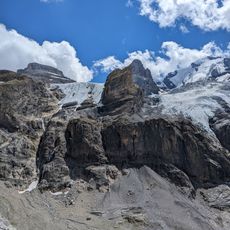
The Blüemlisalp is a heavily glaciated massif in the Bernese Alps, entirely within the canton of Bern. Its main ridge carries four peaks from west to east: Oeschinenhorn (3,486 m), Blüemlisalphorn (3,660 m), Wyssi Frau (3,648 m) and Morgenhorn (3,620 m). Three lower summits—Blüemlisalp-Rothorn, Stock and Wildi Frau—stand in front on the north side, while the south flank drops in steep rock walls to the Kanderfirn.
The mountain was first climbed on August 27, 1860, by a party including Leslie Stephen and experienced guide Melchior Anderegg. This ascent marked an important moment in the history of mountaineering in the Alps.
The name Blüemlisalp is tied to a legend in which a proud dairyman's servant had a path of cheese wheels laid around the house, with butter in the joints; his mother's curse buried the alpine pasture under ice. The massif also appears in Friedrich Dürrenmatt's story Winterkrieg in Tibet and in Polo Hofer's song Alperose. A paddle steamer on Lake Thun and the Thun section of the Swiss Alpine Club bear the name.
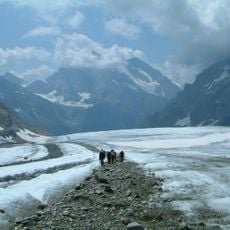
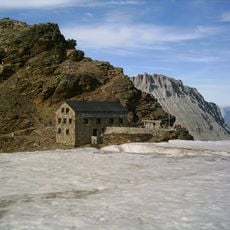
The standard approach begins at Blümlisalphütte at 2,840 meters, where visitors should have proper climbing equipment and glacier experience. Steep sections require technical climbing skills and confidence on rocky terrain.
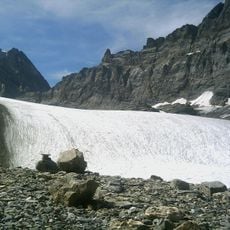
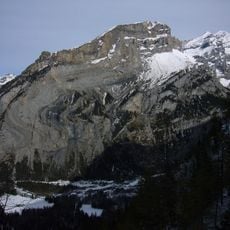
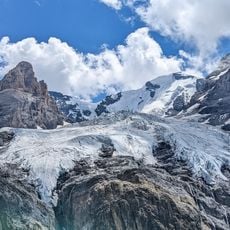
The massif's north side is covered by firn fields visible from the Swiss Mittelland and, in clear weather, from the higher peaks of the Black Forest. The Blüemlisalpgletscher drains these fields into Lake Oeschinen and then the Kander.
The community of curious travelers
AroundUs brings together thousands of curated places, local tips, and hidden gems, enriched daily by 93,431 contributors worldwide.