Heureka, Kinetic sculpture at Zürichhorn, Switzerland
Heureka is a kinetic sculpture at Zürichhorn composed of motors, gears, iron rods, steel wheels, metal tubes, and pans. The work uses these components to remain in constant motion while generating acoustic effects.
Tinguely built the sculpture in 1963–1964 for the Swiss National Exhibition in Lausanne, where it stood beside the "Weg der Schweiz" section. Industrialist and patron Walter Bechtler bought it for the city of Zurich and had it dismantled and stored on his factory grounds. After a long search for a site, it was mounted "provisionally" at the Zürichhorn in 1967, partly under pressure from filmmaker Ernst A. Heiniger, who wanted it running in his Expo 67 film "Switzerland".
The work expresses a mechanical view of industrial society through constant motion that creates only sound without serving any practical purpose. Visitors experience in this interplay between form and function a commentary on modern production.
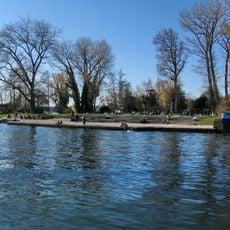
Heureka stands in the Zürichhorn park on the shore of Lake Zurich, reachable on foot along the lakeside promenade. The machine is powered by five electric motors running on 220 V, so its movements depend on the power supply rather than on fixed viewing times. Walk around the sculpture to see the lifting, swinging and back-and-forth motions of its separate units.
The work was initially rejected as scrap and faced strong public resistance before gradually gaining acceptance. Today it stands as a valued part of the city's landscape and draws visitors who appreciate its contradictory nature.
The community of curious travelers
AroundUs brings together thousands of curated places, local tips, and hidden gems, enriched daily by 92,717 contributors worldwide.