Mühle Tiefenbrunnen, Gristmill and cultural property in Seefeld, Zurich, Switzerland.
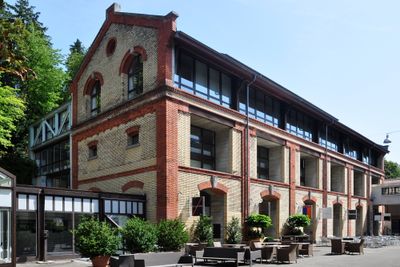
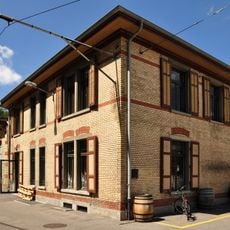
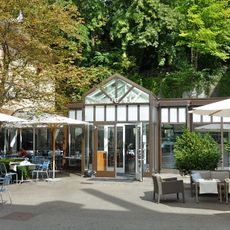
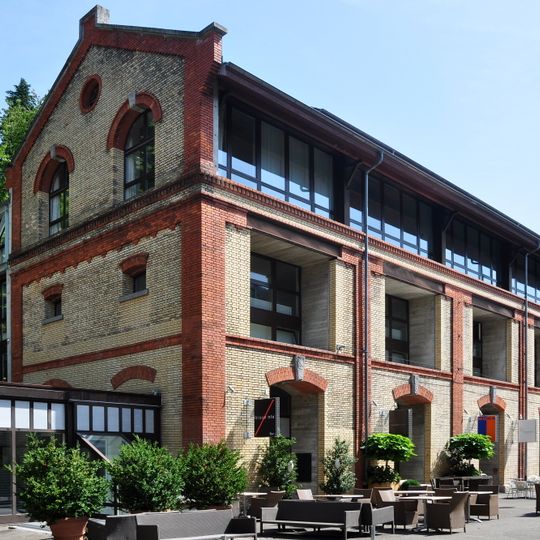
Mühle Tiefenbrunnen is a listed former brewery complex in Zurich's Seefeld district, built in 1889/90 with show facades in exposed brick. Seven buildings form a rectangle around an open courtyard, with two annexes. The main building was converted into a mill in 1913 and now houses the Mühlerama museum, a theatre, dance studios, the Blaue Ente restaurant, offices and flats.
The complex was built in 1889/90 as a brewery with representative facades in exposed masonry, designed by architect Peter Bender of Mannheim. After 23 years a competitor bought and closed it, and in 1913 the millers Wehrli & Koller converted the main building into a mill with electric group drive. Milling ceased in 1983, and the grain collection point remained in operation until 1998.
The Mühlerama occupies the 1913 mill, which still runs during opening hours and grinds several tonnes of Halbweiss and Ruchmehl wheat flour each year. Its permanent exhibition covers the cultural history of grain, while temporary shows focus on nutrition and eating and drinking habits. Workshops and guided tours for children and adults include bread-baking courses and visits to the historic mill.
The complex sits directly behind Tiefenbrunnen station in the Seefeld district, so S-Bahn and tram connections bring you to the entrance. The seven buildings form a rectangle around an open courtyard, which serves as the main orientation point; the museum mill, theatre and restaurant are reached from there.
The Mühlerama mill still operates during museum opening hours, grinding several tonnes of half-white and wholemeal wheat flour each year. The building also houses the studio of fashion designer Christa de Carouge and the dance department of the Zurich University of the Arts.
The community of curious travelers
AroundUs brings together thousands of curated places, local tips, and hidden gems, enriched daily by 94,522 contributors worldwide.