Dossen, Mountain summit in the Bernese Oberland, Switzerland
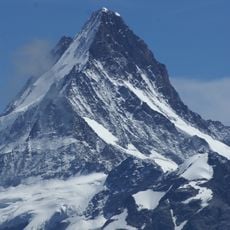
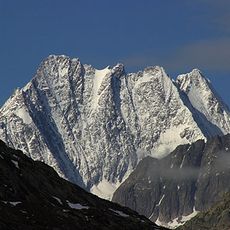
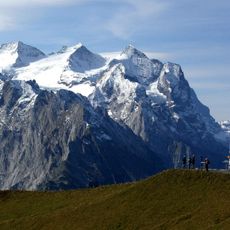
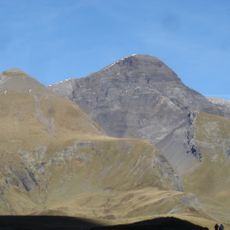
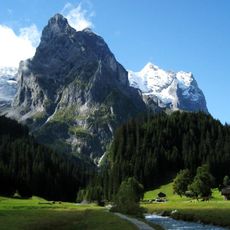
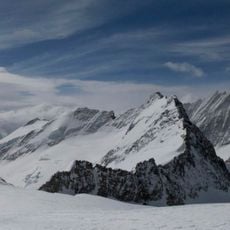
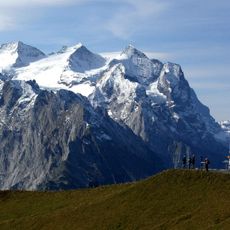
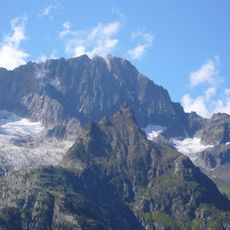
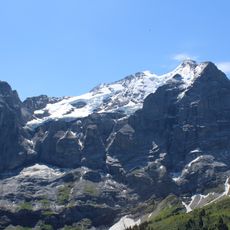
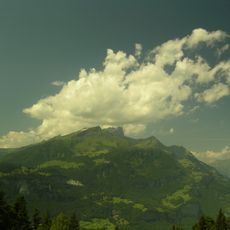
Dossen, also called Dossenhorn or Tossen, is a double-peaked summit in the Bernese Alps above Rosenlaui. Its southern main summit reaches 3,144 m and the northern summit 3,139 m, separated by a short ridge. The mountain is built of old crystalline rock of the Aarmassiv and forms the southern continuation of the Engelhörner chain.
The first documented tourist ascent was made on 13 August 1828 by the naturalist Franz Joseph Hugi and companions; local chamois hunters had likely climbed it earlier. The Dossenhütte at 2,663 m, owned by the Swiss Alpine Club, now serves the normal route over the north ridge.
The name comes from the Swiss German dialect word Tosse, meaning a massive, bare rock peak, as defined in the Schweizerisches Idiotikon. The Swiss national map labels the mountain Tossen, while climbers traditionally say Dossenhorn. The same word appears elsewhere in the Alps, for example on the Pilatus and Rigi massifs.
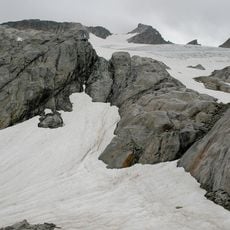
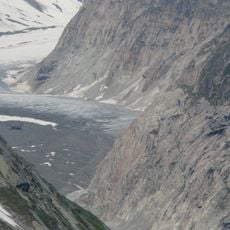
The normal route starts at the Dossenhütte (2,663 m) and follows the northeast ridge over the 3,032 m fore-summit, then descends to the Dossensattel (3,009 m) before climbing the north ridge to both summits; allow 2 to 2.5 hours. The route is mostly easy block scrambling with short passages up to grade II+, partly secured with fixed cables and bolts. The old approach over the Dossengletscher is warned against because the exposed rock is badly broken.
The name Dossen comes from the Swiss German dialect word Tosse, meaning a massive, bare rock peak; the Swiss national map labels the mountain Tossen. The first documented tourist ascent was made on 13 August 1828 by the naturalist Franz Joseph Hugi and companions, who is also honoured by the Hugisattel and Hugihorn near the Finsteraarhorn.
The community of curious travelers
AroundUs brings together thousands of curated places, local tips, and hidden gems, enriched daily by 94,025 contributors worldwide.