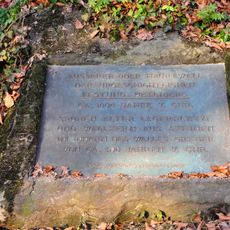
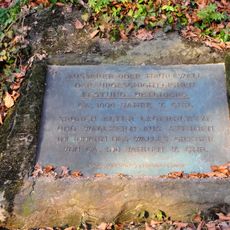
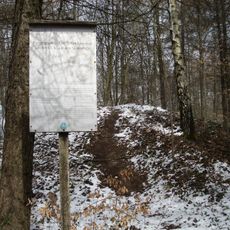
Festung Uetliberg, Military fortress on Uetliberg mountain, Zürich, Switzerland.
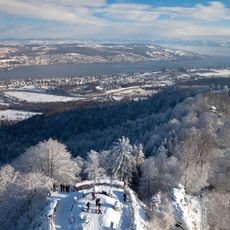
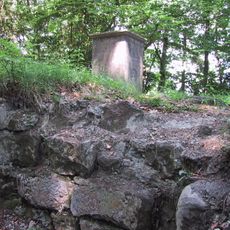
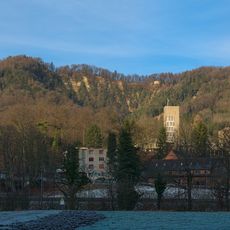
Festung Uetliberg is a military fortification stretching several kilometers along a ridge between different locations and featuring concrete shelters and artillery positions. The complex follows the natural slope of the terrain and offers views down into the valley below.
The Uetliberg position was prepared from October 1939 to August 1940 under Operationsbefehl No. 2 of 4 October 1939, when the Swiss Army occupied the Limmatstellung to block an attack from the north. The 6th Division under Herbert Constam held the three-kilometre sector between Uetliberg, Uitikon-Waldegg and the Urdorfer Senke, using a mobile defence in depth in the steep, wooded terrain. Constam's concept anticipated the army's 1995 doctrine of dynamic area defence.
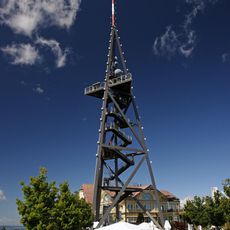
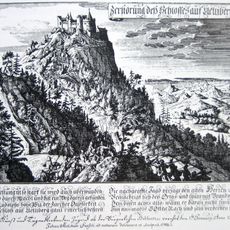
The name Uetliberg derives from Uto Kulm, the summit plateau where the Celtic Helvetii built their oppidum and where the Uetliburg castle stood from the 10th century. The sector name Waldegg refers to the blocking position near Uitikon-Waldegg, a designated target area for concentrated artillery fire directed by observers on the ridge.
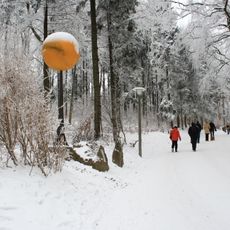
The site is reachable via hiking trails or public transportation and sits on a hillside with good views. Guided tours can be arranged through local history groups for more detailed insights into the complex.
The fortification's commander, Herbert Constam, was the highest-ranking officer of Jewish origin in the Swiss Army. He chose a flexible, mobile defence using the steep wooded slopes of the Uetliberg, a concept the army adopted as doctrine only in 1995.
The community of curious travelers
AroundUs brings together thousands of curated places, local tips, and hidden gems, enriched daily by 92,780 contributors worldwide.