Münsterbrücke, Stone arch bridge in central Zürich, Switzerland
The Münsterbrücke is a stone arch bridge over the Limmat in Zurich, linking Münsterhof, Stadthausquai and Limmatquai. It has four flat arches of 14.7 m span and 2.1 m rise, plus a fifth arch over a former channel to the Kornhaus. The pillars are clad in black Jura marble, the cornices and roadway stones are St. Gotthard granite, and the cast-iron railings came from the Grand Duchy of Baden.
Construction took place between 1836 and 1838 under engineer Alois Negrelli's direction, replacing a wooden bridge with origins dating back to Roman times. This shift from wood to stone marked Zurich's move toward modern 19th-century infrastructure.
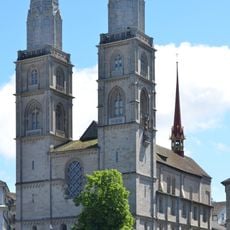
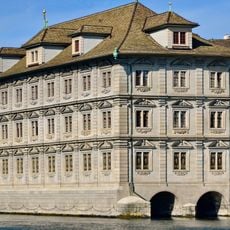
Locals also call it the Helmhausbrücke, after the nearby Helmhaus. The bridge is named for the Fraumünster and Grossmünster it links. Since 2004 it has been one of three pilot projects of the Plan Lumière, lit at night. The Hans Waldmann equestrian monument by Hermann Haller, unveiled on 6 April 1937, stands at the western bridgehead.
Crossing on foot is straightforward, as the bridge is part of the main walking routes through the old city and easily accessible by public transit. Trams and tour boats operate at and beneath this location, making it a major transport hub.
The bridge rests on a foundation of around 472 oak piles filled with concrete, supporting a total weight of about 6,100 tons of stone. This hidden engineering solution beneath the visible structure showcases the technical skill of 19th-century builders.
The community of curious travelers
AroundUs brings together thousands of curated places, local tips, and hidden gems, enriched daily by 94,072 contributors worldwide.