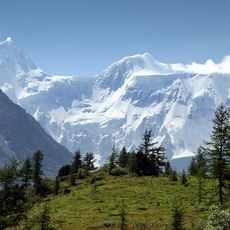
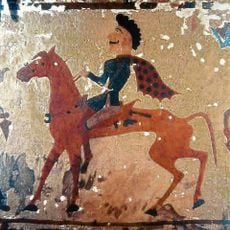
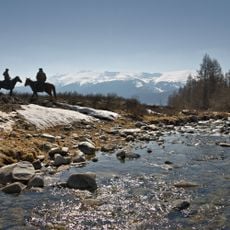
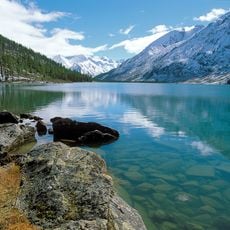
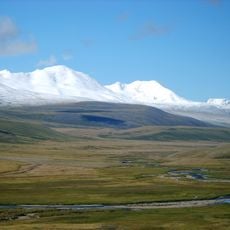
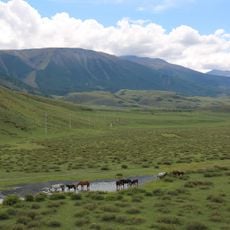
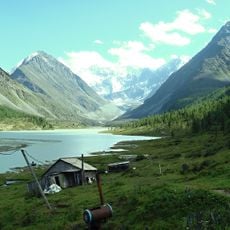
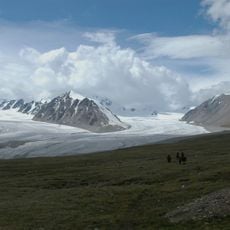
Tavan Bogd, Mountain massif in Bayan-Ölgii Province, Mongolia
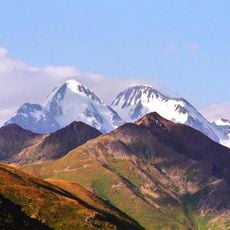
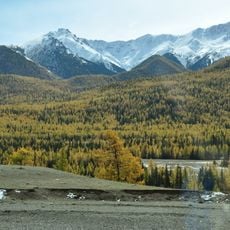
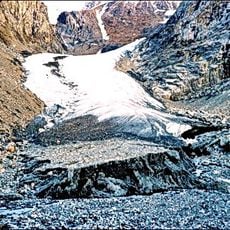
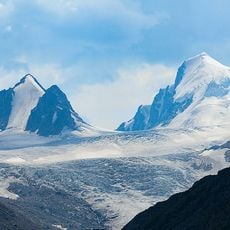
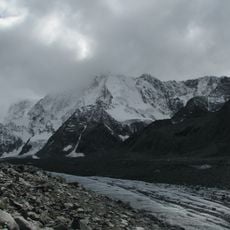
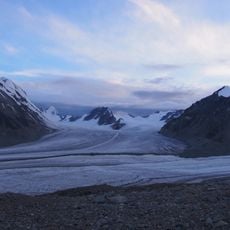
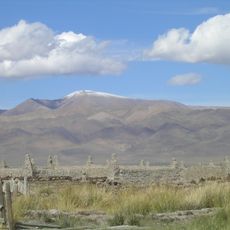
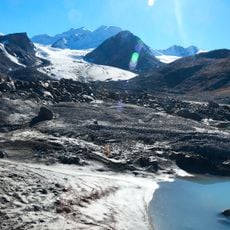
Tavan Bogd is a massif of five peaks in the Altai range, mostly in Mongolia's Bayan-Ölgii Province, with northern slopes in Russia's Altai Republic and western slopes in China's Burqin County. Its highest summit, Khüiten Peak, reaches 4374 m, Mongolia's highest point. The other four are Nairamdal, Malchin, Bürged and Ölgii. The tripoint peak, 4081 or 4104 m, carries no border marker.
The first recorded ascent of Tavan Bogd took place in 1956, marking the start of mountaineering in this remote Altai region. After this event, expeditions began arriving regularly to explore the high peaks.
Since 2012 Tavan Bogd has been a state-worshipped mountain, honoured with an offering ceremony every four years. The massif lies in Ulaankhus sum of Bayan-Ölgii Province, and its Mongolian slopes form part of Altai Tavan Bogd National Park, designated in 1996 together with lakes Khoton, Khurgan and Dayan.
The area requires military permits due to its proximity to international borders, and you will need to arrange transportation from Ölgii town. Visitors should prepare for remote conditions and complete necessary paperwork before traveling.
The tripoint where China, Russia and Mongolia meet lies on a 4,081–4,104 m peak called Tavan Bogd Peak in the border agreements and maps; because the summit is covered in perpetual snow and hard to reach, the three states agreed not to place a border marker there. Some sources instead name Nairamdal Peak as the tripoint, which the official documents do not confirm.
The community of curious travelers
AroundUs brings together thousands of curated places, local tips, and hidden gems, enriched daily by 92,784 contributors worldwide.