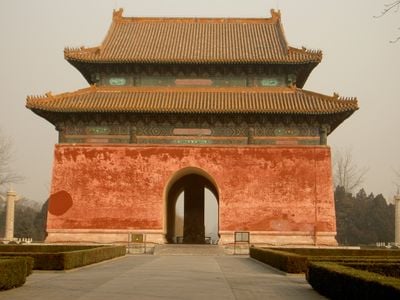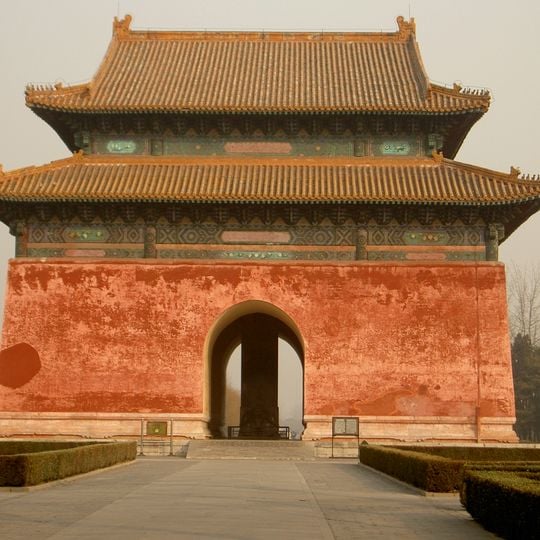
Imperial Tombs of the Ming and Qing Dynasties, Royal burial complex at Dragon Gate Mountain, China.
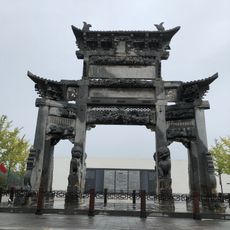
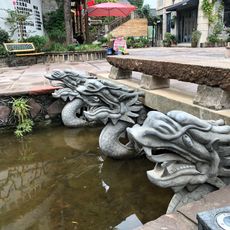
The Imperial Tombs of the Ming and Qing Dynasties form a burial complex with 13 mausoleums near Beijing, scattered across multiple provinces. Each site features carved stone sculptures, ceremonial halls, gates, and pathways that guide visitors through the grounds.
The Ming tombs near Beijing were listed by UNESCO in 2003, while the Xianling Tomb in Hubei, built for the 12th Ming emperor between 1519 and 1566, entered the list in 2000. Three 17th-century Qing tombs in Liaoning, built for the dynasty's founding emperors and their ancestors, were added in 2004. The Qing continued the Ming burial system, adding feng shui siting and a fuller sacrificial order.
The tombs reflect traditional beliefs about the afterlife through their gates, altars, and burial mounds arranged according to feng shui principles. These elements shape how visitors experience the grounds today and reveal what mattered most to the families buried here.
The inscribed properties are scattered across Jiangsu, Beijing, Hubei, Liaoning and Hebei, so no single visit covers them all. The Ming tombs near Beijing and the Eastern and Western Qing tombs in Hebei are the groups most often toured, and their grounds are large enough that walking between gates, halls and mounds takes hours. Sturdy shoes help on the uneven stone paths and hilly terrain.
The Ming tombs near Beijing number thirteen, but the World Heritage listing also covers tombs elsewhere, such as the Xianling Tomb in Hubei, built between 1519 and 1566 for the twelfth Ming emperor. The Hongwu Emperor's tombs for his own parents and ancestors, at Fengyang and Xuyi, are not part of the UNESCO site.
The community of curious travelers
AroundUs brings together thousands of curated places, local tips, and hidden gems, enriched daily by 92,784 contributors worldwide.