米公祠, National heritage site in Xiangyang, China
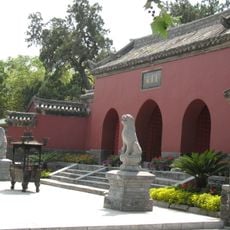
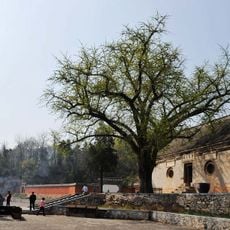
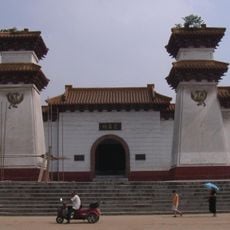
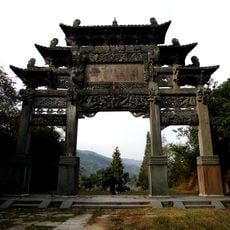
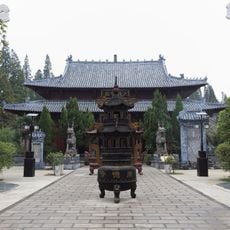
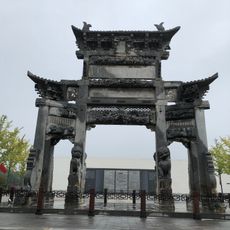
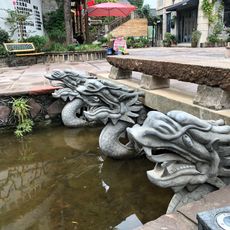
Mi Gong Shrine is a temple complex featuring architectural styles from different periods with traditional Chinese design elements in its halls and courtyards. The structure houses a collection of artworks and historical objects that illustrate the importance of this location.
The shrine began as Mi Jia An, a Yuan-dynasty hermitage, was expanded in the Ming, and was rebuilt and renamed a shrine during the Kangxi reign of the Qing. It honours Mi Fu, a Northern Song calligrapher and connoisseur. The Bai Dian hall dates to 1693 and the Bao Jin hall to 1866.
The shrine keeps 45 engraved copies of Mi Fu's calligraphy and 58 stone inscriptions, including the stele recording the reconstruction of the Mi family's hometown. Mi Fu was a Northern Song calligrapher and connoisseur, not a Tang figure. The site was originally a Buddhist nunnery called Mi Jia An before being renamed a shrine during the Kangxi era.
The site is accessible to visitors with guided tours available during regular hours and informational materials in several languages. Visitors should dress respectfully and handle the space with care when exploring the shrine and its collections.
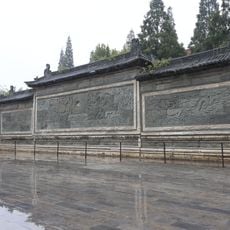
The shrine holds 58 stone inscriptions, among them the "Reconstruction of the Mi Family's Hometown Monument," plus 45 engraved copies of Mi Fu's calligraphy models. These steles, not the halls, are what earned the site its 1956 provincial listing as "Mi Gong Ci and its stone carvings."
The community of curious travelers
AroundUs brings together thousands of curated places, local tips, and hidden gems, enriched daily by 93,836 contributors worldwide.