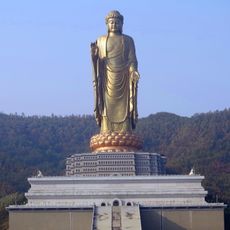
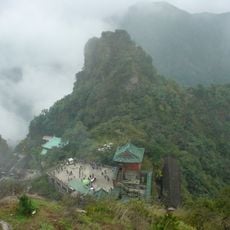
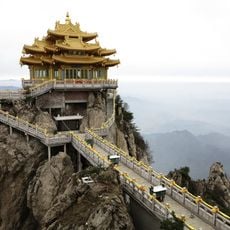
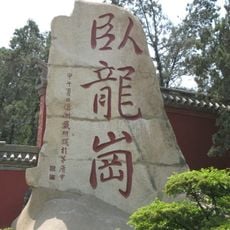
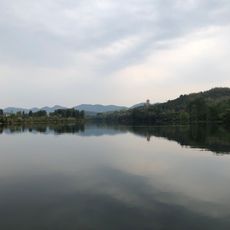
Xiangyan Temple, Buddhist temple in Xichuan County, Henan, China
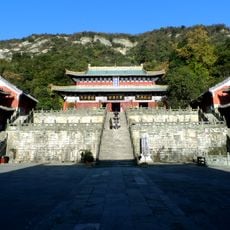
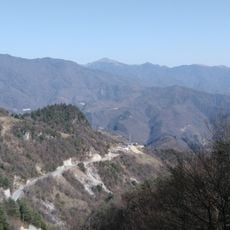
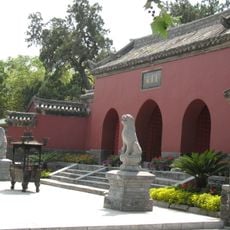
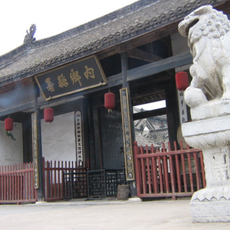
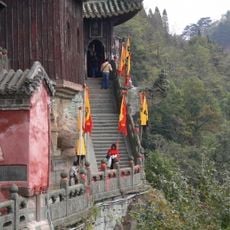
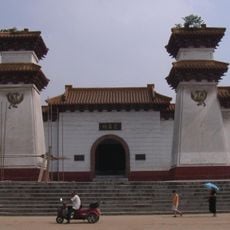
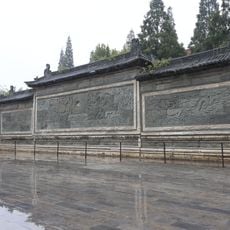
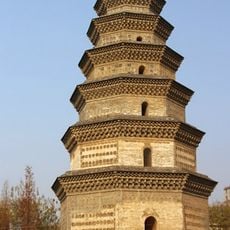
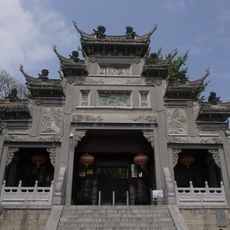
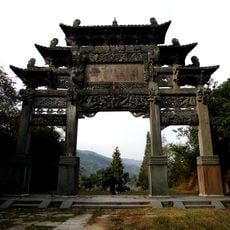
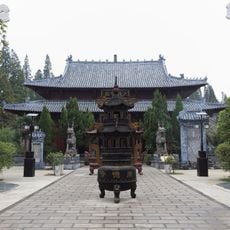
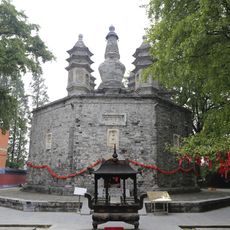
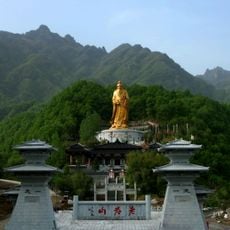
Xiangyan Temple sits in a lotus-shaped basin of the Baiya Mountains in Cangfang Town, Xichuan County, with Longshan to the east and Hushan to the west. The surviving Upper Temple faces south and climbs the slope in eight terraces and five courtyards, from a stone archway and Shanmen gate through Weituo Hall and the Great Buddha Hall to the Sutra Library. It retains 141 rooms, 480 wood carvings, 480 brick carvings, 520 stone carvings and 780 square metres of murals.
The temple was founded in 767 during the Tang dynasty and was originally called Changshou Temple. Through later periods, the complex underwent reconstructions that shaped its current layout and appearance.
The name Xiangyan comes from the fragrant smoke that reportedly lingered for a month when Huizhong's relics were enshrined in 775, echoing the Buddhist phrase "xiangguang zhuangyan". The temple was a major Linji school centre: six generations and nine Linji masters led it from 1657 to 1851. In 1996 a photographer from the Korean JoongAng Ilbo came to trace Huizhong and the Linji roots, and in 2000 a group of 19 from Japan's Kokutaiji came to pay homage.
The temple welcomes visitors who can walk through the halls and explore the grounds at their own pace. It is best to move quietly and respectfully, allowing time to look at the decorations and architectural details carefully.
Behind the sutra library (Cangjing Lou) lies a small pavilion wrapped in yellow curtains that monks call the "disaster-dispelling ground": however often the square of earth is dug out, it rises level again by itself. The temple also keeps 268 old trees of 102 species, among them a 300-year crape myrtle whose trunk trembles when its branches are touched.
The community of curious travelers
AroundUs brings together thousands of curated places, local tips, and hidden gems, enriched daily by 94,473 contributors worldwide.