Taosi, Archaeological site in Xiangfen County, Shanxi, China.
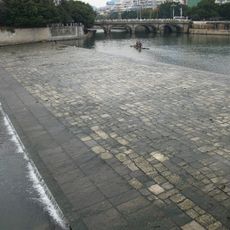
Taosi is an archaeological site covering approximately 280 hectares surrounded by rammed-clay walls, with distinct zones for living, ceremonies, and astronomical observation. The remains date from 2300 to 1900 BC and reveal the organization of an early civilisation.
Occupation began around 2300 BC and the site was abandoned by about 1900 BC. A rammed-clay wall enclosing 280 hectares was built in the Middle Taosi period (2100–2000 BC), found by the Institute of Archaeology, Chinese Academy of Social Sciences, in 1999–2001. In the Late Taosi period the city was levelled and became an ordinary settlement. It was listed as a Major Historical and Cultural Site Protected at the National Level in 1988.
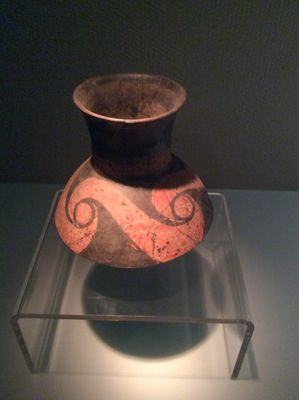
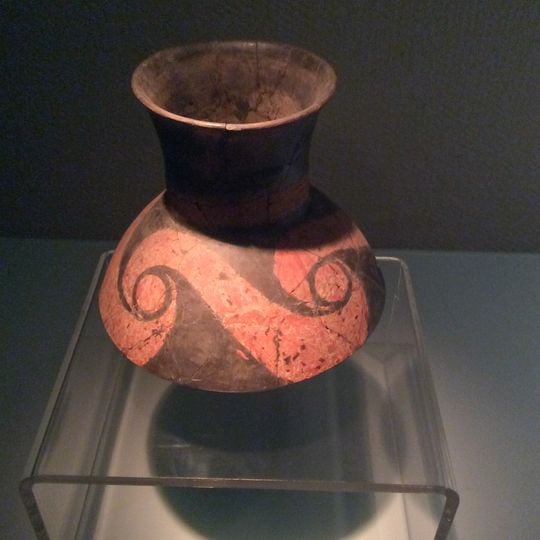
The name Taosi comes from Taosi township, where the site lies. Finds include a painted pottery flat flask from ash pit H3403 bearing two red symbols read by some scholars as "wen" and "Yao", and a copper gear-like object with 29 openings that may have counted lunar months. A painted pole from tomb IIM22, about 180 cm long, is interpreted as a gnomon shadow-measuring ruler.
The site spans a large area, so allow plenty of time and wear comfortable shoes to explore the different zones. It helps to have a local guide explain the excavation areas and what each structure reveals about how people lived.
The painted pottery flat flask from ash pit H3403 bears two red symbols that scholars read as "文" and "尧"; Luo Kun argued the pair may be an honorific for the deceased King Yao. If these are writing, Chinese script would be pushed back to about 4,000 years ago. A broken potsherd found in 2006 may preserve part of the same "尧" character.
The community of curious travelers
AroundUs brings together thousands of curated places, local tips, and hidden gems, enriched daily by 92,816 contributors worldwide.