Hong Kong–Zhuhai–Macau Bridge, Bridge-tunnel crossing in the Pearl River Delta, China
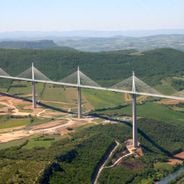
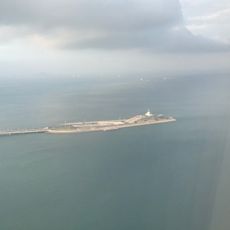
The Hong Kong–Zhuhai–Macau Bridge is a 55-kilometre bridge–tunnel system across the Lingding and Jiuzhou channels of the Pearl River estuary, linking Hong Kong, Macau and Zhuhai. Its Main Bridge runs 29.6 km and combines a viaduct with three cable-stayed spans of 280 to 460 metres over the shipping lanes, plus a 6.7-km immersed tube tunnel between the Blue Dolphin and White Dolphin islands. The pale grey deck is carried on paired piers, and at the central spans two slender inverted-Y pylons rise above it, thin cables fanning down to the roadway.
Construction began in December 2009 and the crossing opened to traffic in October 2018. The project took shape as demand for a direct link between the three regions around the Pearl River estuary grew steadily over the preceding decades.
The name "Hong Kong–Zhuhai–Macau Bridge" was chosen in 2005 when the single-Y alignment was adopted. The crossing is operated by the HZMB Authority, which handles maintenance and management. Its opening created a "one-hour living circle" across the three places.
The crossing joins three separate border regimes, so drivers pass immigration at each end rather than once. Hong Kong-registered cars cannot enter Macau directly; the Zhuhai-Macao port island holds a 3,000-space car park for foreign vehicles and about 5,100 spaces for Macau cars. Shuttle buses also run from the Hong Kong port to the airport's SkyPier for transit passengers.
The undersea tunnel runs deep enough to let large cargo ships pass over it without any disruption to traffic above or below. The crossing was designed to withstand earthquakes measuring 8 on the Richter scale and typhoons of category 16.
The community of curious travelers
AroundUs brings together thousands of curated places, local tips, and hidden gems, enriched daily by 92,115 contributors worldwide.