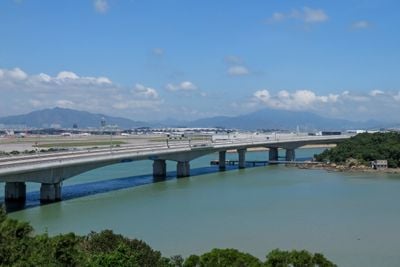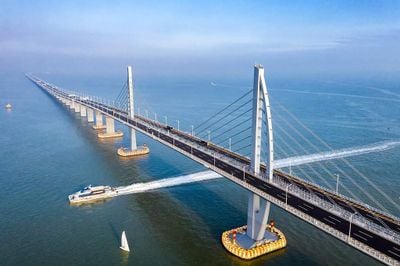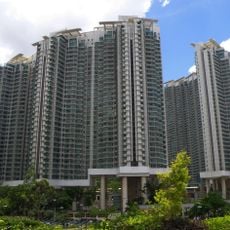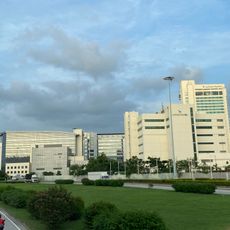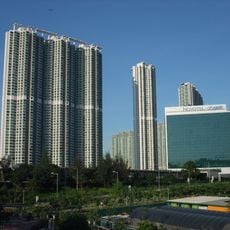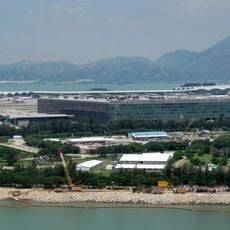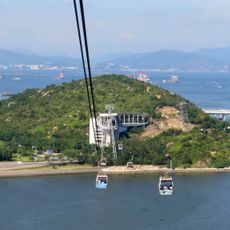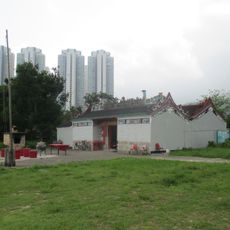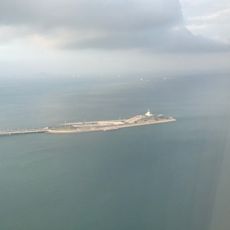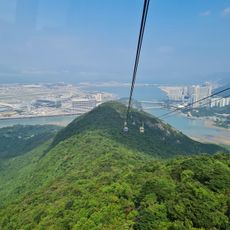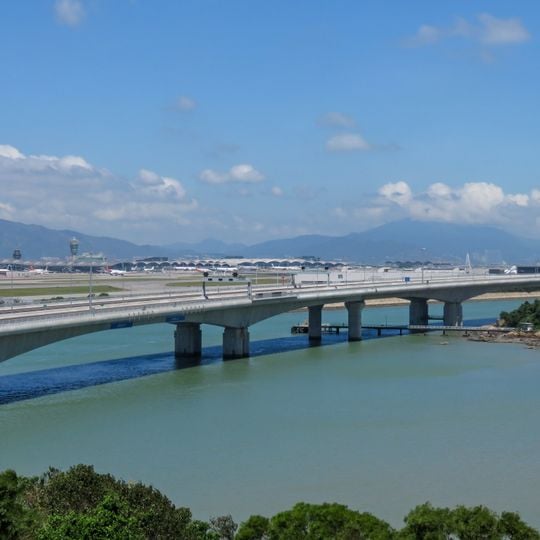
Hong Kong-Zhuhai-Macao Bridge Hong Kong Link Road, Box girder bridge in Islands District, China.
The 7.5-mile Hong Kong Link Road extends from the artificial border island to Hong Kong mainland, comprising box girder bridges on concrete piers and a tunnel through Scenic Hill. The roadway runs in both directions with multiple lanes, connecting to local highways near the airport. Drainage systems and safety installations line the entire length of elevated sections over coastal waters.
Construction began in December 2011 after years of environmental impact studies addressing concerns about marine ecology and Chinese white dolphin habitats. Completion occurred in October 2018 after seven years of work managing engineering challenges in shallow coastal terrain and geological conditions. The project coordinated with parallel construction of the main bridge and subsea tunnel across three different jurisdictions.
This segment serves as infrastructure linking Hong Kong International Airport with border checkpoints on the artificial island, enabling movement of goods and people between special administrative regions and mainland territory. The connection altered regional economic relationships by reducing travel time across the Pearl River Delta. Commuters and logistics companies use the route for cross-border activities that previously required ferry connections or longer overland routes.
Vehicles require special permits and insurance for cross-border journeys, obtainable through authorized agencies in Hong Kong or Macau. Drivers must maintain left-side traffic flow and switch driving sides at border crossings. Fuel stations and emergency services are available on the artificial island before vehicles enter the main bridge segment. Pedestrian and bicycle traffic is prohibited throughout the entire system.
The tunnel beneath Scenic Hill employs a drill-and-blast method rather than modern tunnel boring machines, resulting from geological properties of volcanic rock and cost considerations. The engineering team designed ventilation shafts combining natural air circulation with mechanical systems to manage exhaust concentrations in the enclosed environment. Expansion joints on bridge sections accommodate temperature fluctuations without structural stress, a requirement in subtropical climate.
The community of curious travelers
AroundUs brings together thousands of curated places, local tips, and hidden gems, enriched daily by 91,819 contributors worldwide.