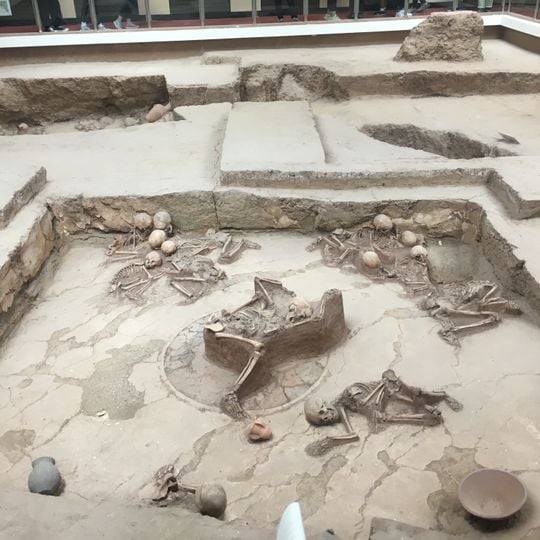
Lajia Ruins, Archaeological site in Minhe Hui and Tu Autonomous County, China.
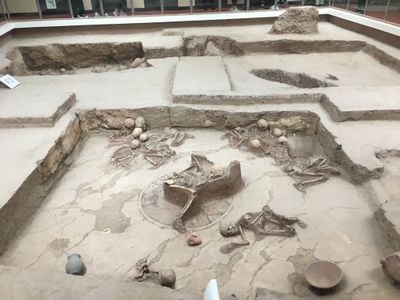
Lajia Ruins is an archaeological site near the Yellow River containing remains of ancient homes and tools from prehistoric times. The excavations reveal traces of people who lived and worked here thousands of years ago.
The site belonged to the Qijia culture and developed between 2300 and 1500 BCE, a period of early civilizations in northern China. A catastrophic event around 1920 BCE began preserving large quantities of artifacts for archaeologists to study.
The inhabitants developed advanced agricultural practices, focusing on millet cultivation while maintaining sheep herds and using pigs specifically for ceremonial purposes.
Visitors can explore the site along marked pathways and observe excavation work taking place. Wear sturdy shoes and bring water in warm weather, as the area is largely open with little shelter.
One of the most important discoveries here is the world's oldest known noodles, found in 2005 inside an inverted pot. The four-thousand-year-old noodle shows that early cultures understood sophisticated food preparation.
The community of curious travelers
AroundUs brings together thousands of curated places, local tips, and hidden gems, enriched daily by 60,000 contributors worldwide.