Sansu Temple, Museum and memorial temple in Sichuan, China
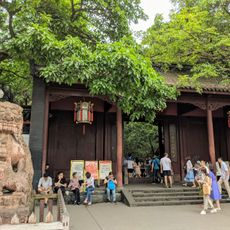
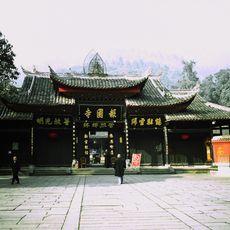
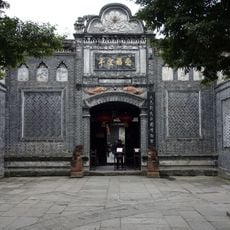
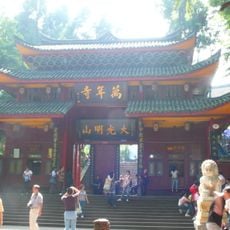
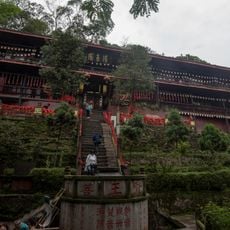
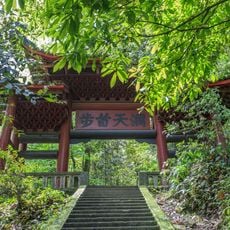
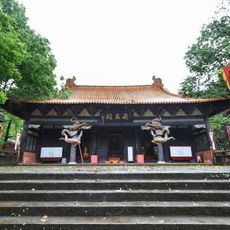
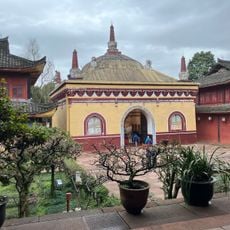
Sansu Temple is a garden and museum in the Dongpo district of Meishan, Sichuan, on the site of the former residence of Su Xun, Su Shi and Su Zhe. Its red walls enclose ponds, old trees and bamboo groves, with halls and pavilions holding statues of the Su family and relics such as an old well and a brush-washing pool.
The site was the residence of Su Xun, Su Shi and Su Zhe, a courtyard of about five mu with an old well and an inkstone-washing pool. In the early Yuan dynasty the house was converted into a shrine; it was destroyed in the wars of the late Ming and rebuilt on the same spot in 1665 by Meizhou prefect Zhao Enya. It was expanded in 1806 and again later, reaching its present 104-mu garden scale.
The temple reflects how the Su family shaped classical Chinese thought through their writings and ideas, visible in the inscriptions and artwork throughout the halls. Visitors encounter their influence as a living part of Chinese intellectual tradition rather than just historical memory.
The temple lies in the Dongpo district of Meishan, about 60 km south of Chengdu, on Shahu Street southwest of the city centre. The grounds cover 104 mu, so allow time to cross the courtyards, and note that the site closed for repairs after the 2013 Lushan earthquake and reopened in April 2016. The red sandstone paving and rockeries date from that restoration.
Among the museum's treasures are Ming and Qing calligraphy works, including Chen Chun's cursive rendering of the Former Ode on the Red Cliff, Wang Shi's Elegant Gathering in the Western Garden, Zhang Fengyi's copy of Su Shi's Later Ode on the Red Cliff, Xu Guangzuo's transcription of Record of a Night Visit to Chengtian Temple, and He Shaoji's Qing-dynasty calligraphy of Su Shi's ci poems.
The community of curious travelers
AroundUs brings together thousands of curated places, local tips, and hidden gems, enriched daily by 93,808 contributors worldwide.