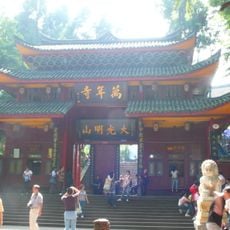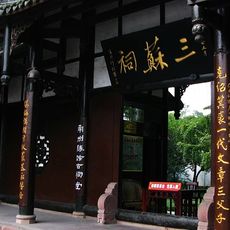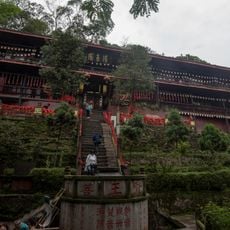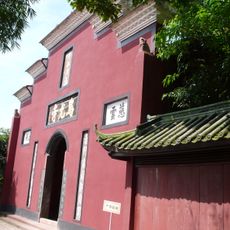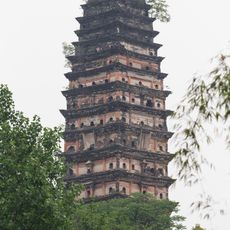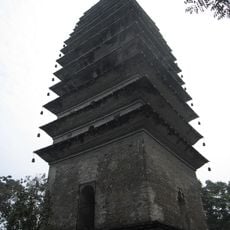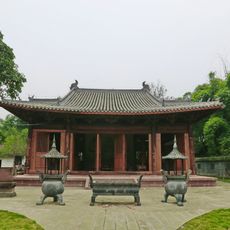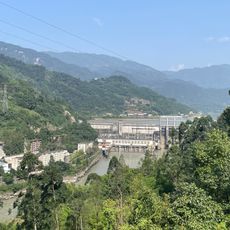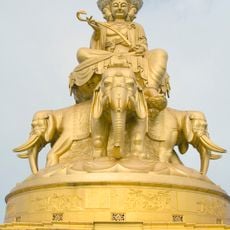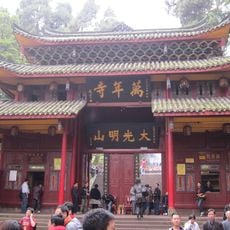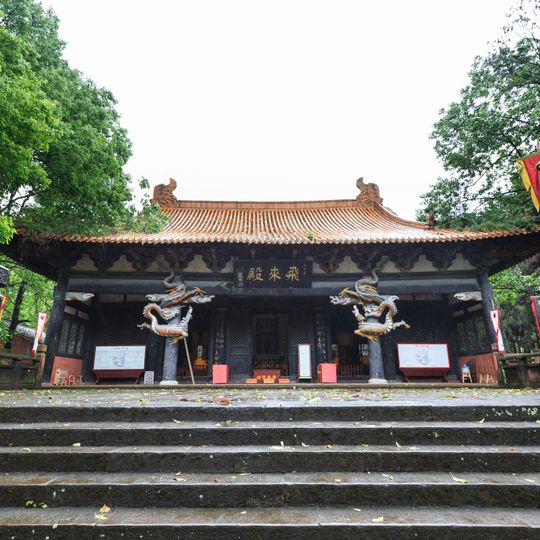
Damiao Feilaidian, Temple complex in Sichuan, China.
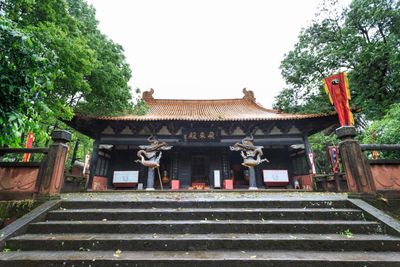
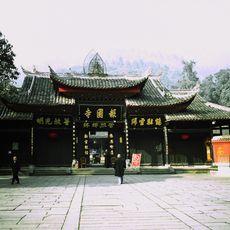
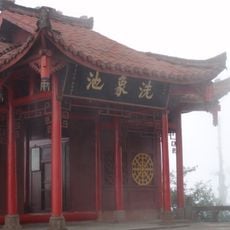
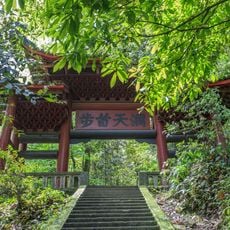
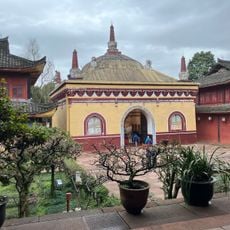
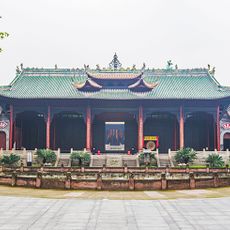
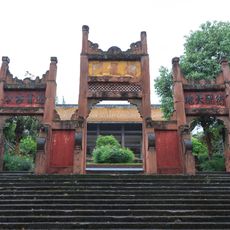
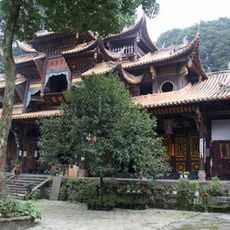
Damiao Feilaidian is a temple complex covering 20,000 square metres on a west-facing slope about 2 km north of Emeishan city, laid out on a west-east axis. Along the central line stand the mountain gate, Xiang Hall, Jiumang Hall and Feilai Hall, with the Pilu and Guanyin halls flanking them. Feilai Hall, the largest surviving Yuan wooden structure in Sichuan, is 19.3 m high, 18.15 m wide and 13.5 m deep, with 38 dougong brackets under its single-eaved hip-and-gable roof.
The complex developed gradually across multiple periods, with each era adding its own construction styles and techniques to the site. It received national protection status in recognition of how its structures document the evolution of Chinese religious architecture and practice through different dynasties.
The name Damiao, "Great Temple", reflects its shift after the Ming Wanli era from a Northern Song Dongyue Temple into a Buddhist monastery, when the Pilu and Guanyin halls were added. The Jiumang Hall, rebuilt in 1632, is dedicated to nine serpents, a motif a visitor can look for in its name and decoration.
The complex lies about 2 km north of Emeishan city centre and is built on a west-to-east axis against a hillside, so the main halls rise in steps from the mountain gate. Visitors walk the central line and side halls on foot; the terrain slopes between buildings.
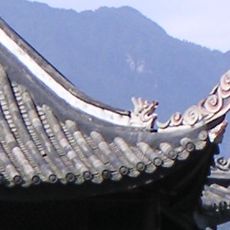
Each building within the site shows distinct construction phases, and close observation of stone carving and woodwork details reveals which periods they come from. This allows visitors to read the architectural timeline simply by looking at the craftsmanship across different areas of the complex.
The community of curious travelers
AroundUs brings together thousands of curated places, local tips, and hidden gems, enriched daily by 94,562 contributors worldwide.