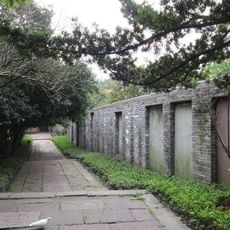
后海塘, Cultural heritage site in Ningbo, China
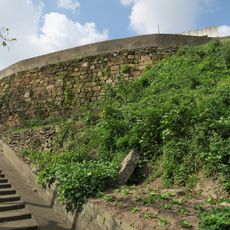
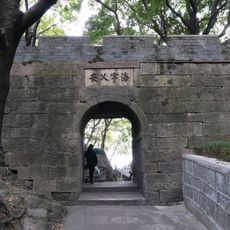
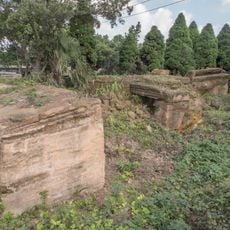
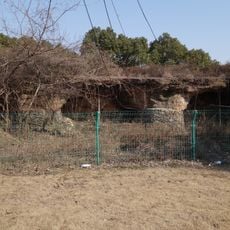
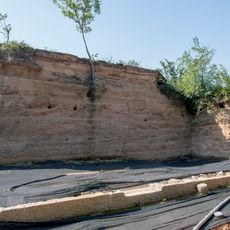
The Houhai Seawall is an ancient sea dike in Zhenhai, Ningbo, running 4.8 km from Jiaxie Pavilion west to Jinzi Hill east. Its 1,300-metre eastern section is built together with the Zhenhai city wall, the dike below and the wall above. The main body is a double-layer stone dike about 6 metres high, inclined at 45 degrees, with seven stone ridges and six horizontal slabs set into the face.
The seawall existed as an earthen dike by 897, when the Dinghai county seat was built. In 1189 the magistrate Tang Shuhan and naval commander Wang Yanju proposed a layered stone wall modeled on the Qiantang River seawall, 600 zhang long; 520 more zhang were added in 1222. In 1379 the county magistrate He Su repaired it, and eight years later the northern city wall was built directly on top of the dike. After the 1748 tidal destruction, magistrate Wang Mengbi rebuilt 576 zhang as a double-layer stone wall, completed in 1750. The seawall protected the Zhenbei plain until 1974, when the outer Zhenbei dike took over; it became a Zhejiang provincial cultural relic in December 1989.
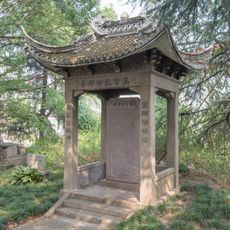
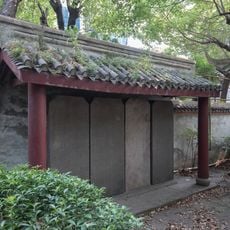
The seawall is not a museum but a walkable relic lined with pavilions. Jiancheng Bei Ting, first built in 1573 and rebuilt in 1990 and 2013, shelters a Ming stele by war minister Zhang Shiche. Anlan Ting, a 1923 concrete pavilion, is nicknamed Wopu Liangting; Hongfu Ting (1924) and Jiaxie Ting (1934) are named after donors who funded repairs.
The site is best explored on foot with walking paths along the waterfront. There are no major facilities here, so wear comfortable shoes and bring protection from sun and wind.
The stonework reveals different building techniques from various periods, showing visible repairs and reinforcements. These layers tell the story of generations who maintained and adapted the structure to changing needs.
The community of curious travelers
AroundUs brings together thousands of curated places, local tips, and hidden gems, enriched daily by 93,801 contributors worldwide.