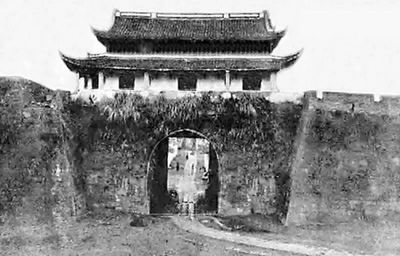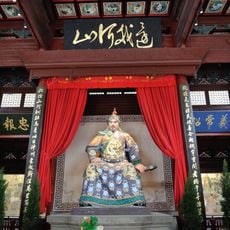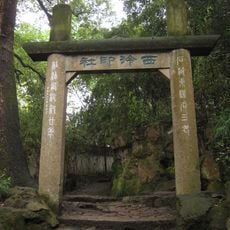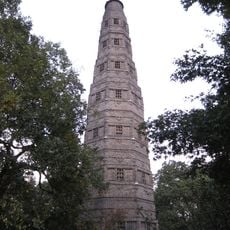
Qiantangmen, Ming Dynasty city gate in Hangzhou, China
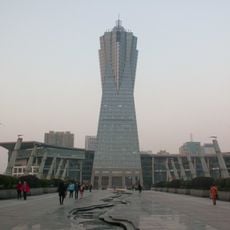
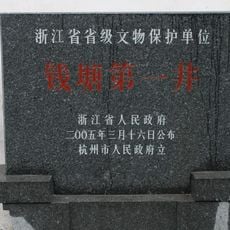
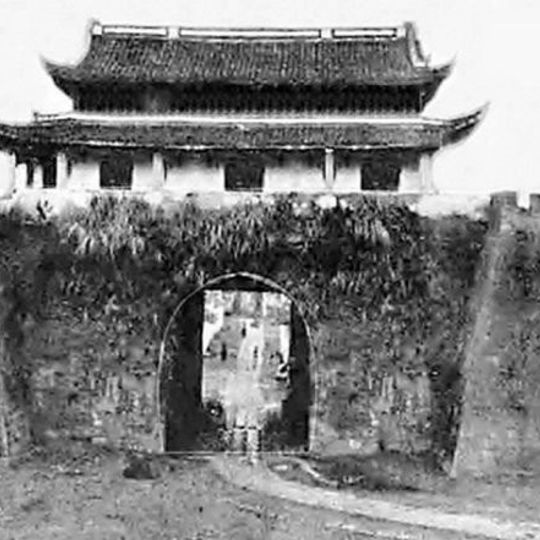
Qiantangmen was one of the west gates of Hangzhou's old walled city, first built in 1148, in the 18th year of the Southern Song Shaoxing era. The gate itself no longer stands: its wall was demolished in 1913 to build Hubin Road, and the site is now the junction of Qingchun Road and Hubin Road, beside the West Lake Times Plaza. The name comes from Qiantang, an old name for Hangzhou.
Qiantangmen was first built in 1148, the eighteenth year of the Southern Song Shaoxing era, as one of the west gates of old Hangzhou. In 1913 the city demolished the walls of Qiantangmen, Yongjinmen and Qingbomen to build Hubin Road and Nanshan Road, reconnecting West Lake with the urban centre. The gate site now lies at the junction of Qingchun Road and Hubin Road, beside the West Lake Times Plaza.
The gate gave its name to a local rhyme, "Xiang Lan Er" (the incense basket of Qiantangmen), because pilgrims heading to the Lingyin and Tianzhu temples passed through it. Li Shutong wrote the lyrics of his song "Songbie" (Farewell), with the line "Beyond the long pavilion, beside the old road, green grass meets the sky", near the gate.
The gate is accessible by multiple bus lines that stop nearby, making it easy to reach from different parts of the city. Signage in Chinese and English provides information about the structure and its history.
The gate no longer stands: it was demolished in 1913 to build Hubin Road, and its site is now the junction of Qingchun Road and Hubin Road beside the West Lake Times Plaza. The songwriter Li Shutong wrote the verses of "Songbie" ("Beyond the long pavilion, by the ancient road, green grass meets the sky") beside the old Qiantangmen.
The community of curious travelers
AroundUs brings together thousands of curated places, local tips, and hidden gems, enriched daily by 93,680 contributors worldwide.