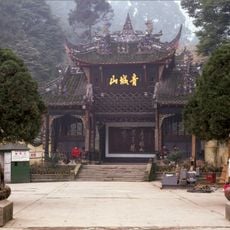
Xichang Chuanwang Palace, Temple complex in Xinchang, China.
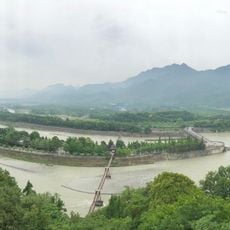
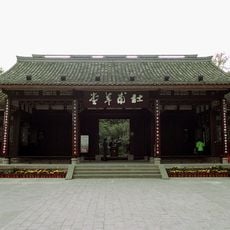
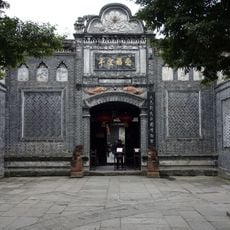
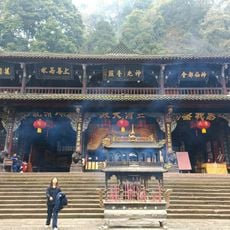
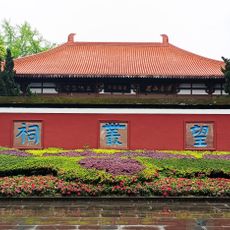
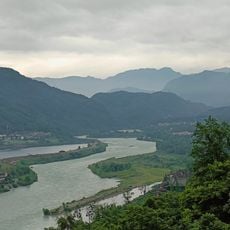
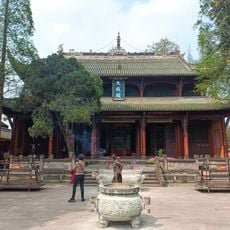
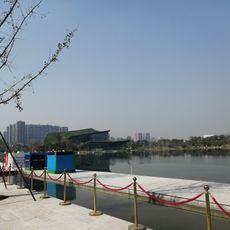
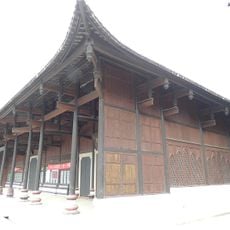
Xinchang Chuanwang Palace stands on the bank of the Hutiao River in Xinchang town, Dayi County, Chengdu, Sichuan. All its present buildings date from a 1926 reconstruction and use the chuandou timber-frame method typical of the Bashu region, with interlocking posts and beams rather than bracket sets. It is a rare surviving example of early 20th-century wooden temple architecture in western Sichuan.
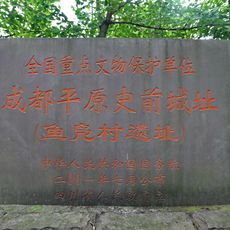
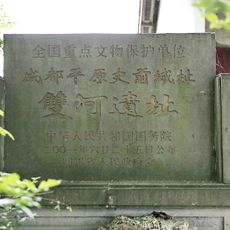
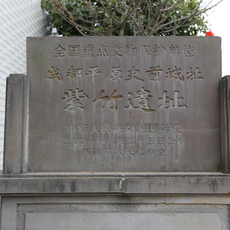
The temple was first built in the Ming dynasty and all its present buildings date from a 1926 reconstruction. It was founded to honour Li Bing, the Warring States governor of Shu remembered for his waterworks, and later became a temple of the Three Teachings. It was listed as a Sichuan provincial heritage site in 2007 and a national one in 2013.
The temple became a sanctuary of the Three Teachings, combining Buddhism, Daoism and folk beliefs. Inside are statues of the legendary Daoist Zhang Sanfeng and of Manjushri and Samantabhadra, bodhisattvas of wisdom and meditation. A statue of Li Bing stands in front of the palace.
The temple stands on the bank of the Hutiao River in Xinchang town, Dayi County, Chengdu. It is a protected national site, so access follows the opening arrangements of the managing authority rather than fixed tourist hours. The halls are timber-frame structures; a torch helps in the dimmer interior rooms.
A statue of Li Bing stands at the entrance, marking his importance as an ancient engineer and official from the Shu state. Few visitors realize that Li Bing was primarily known for irrigation systems he designed, which fundamentally changed how water reached local settlements.
The community of curious travelers
AroundUs brings together thousands of curated places, local tips, and hidden gems, enriched daily by 93,796 contributors worldwide.