Dujiangyan, Irrigation system in Dujiangyan City, China
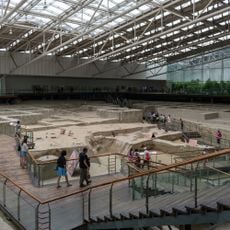
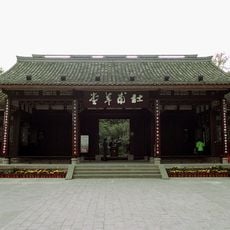
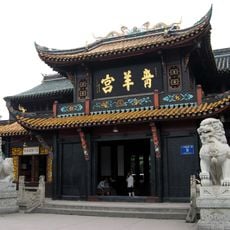
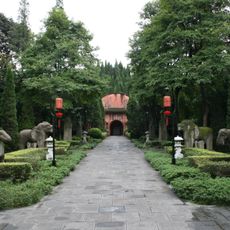
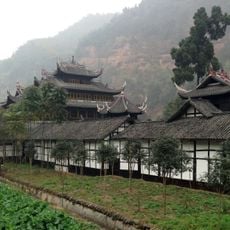
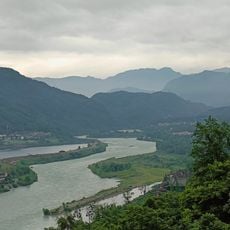
Dujiangyan is a water management network on the Min River in Dujiangyan City, Sichuan province. It guides the river flow through a sequence of forks, low dams, and weirs across the Chengdu Plain, still supplying fields and villages with water today.
The State of Qin built the network in 256 BC under the direction of Li Bing to tame the Min River floods and irrigate the plain. His son continued the construction, securing the region's food supply for centuries that followed.
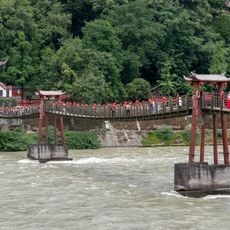
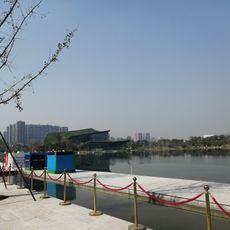
The name Dujiangyan refers to the whole system, whose key part is the Yuzui, a levee named for its fish-mouth shape that splits the Min River into an inner and an outer stream. The inner stream feeds the Chengdu Plain; the outer drains floods and silt. Visitors cross the river on the Anlan suspension bridge and can see the split from the bank.
The main structures sit on both banks of the river and can be visited on foot, with bridges connecting the access points. Visitors who want to see how it works should come during the rainy season, when water volumes are higher.
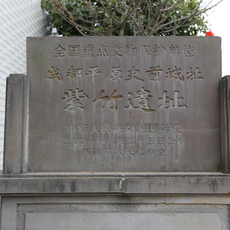
The annual winter repair, called suixiu, traditionally used bamboo baskets filled with stones and wooden tripods to seal the river. Since the Ming dynasty, three iron bars buried in the riverbed have marked the depth to which the channel must be dredged; the bars, cast in 1573, 1863 and 1927, still lie near the left bank of the Baopingkou channel.
The community of curious travelers
AroundUs brings together thousands of curated places, local tips, and hidden gems, enriched daily by 93,473 contributors worldwide.