Tomb of Wang Jian, Royal burial site in Jinniu District, China
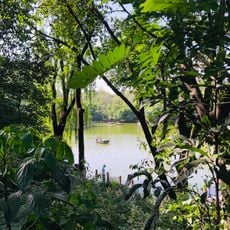
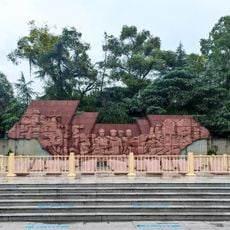
The Tomb of Wang Jian is a royal burial site in Jinniu District, Chengdu, China. The complex consists of a circular earthen mound with an underground chamber divided into three rooms, housing a stone sculpture of the ruler.
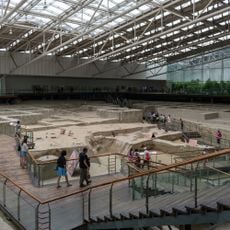
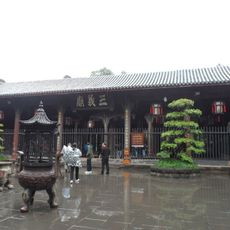
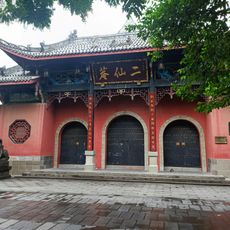
Wang Jian died in 918 and was buried in this tomb. In 933 Meng Zhixiang, not yet emperor, had it renovated and banned firewood cutting nearby. In 1014 several mausoleum buildings were demolished and their material reused for a Taoist temple, Yuejuhua; the rest became a Buddhist temple, renamed Yongqingyuan in 1103, later destroyed by fire. Only the mound and chamber remained until Feng Hanji's excavations of 1942–1943.
The mound was long known as Fuqintai, the "qin-playing terrace", because locals attached legends of Sima Xiangru and Zhuge Liang playing the qin to it. Wang Yan, Wang Jian's successor, visited the tomb in December 918 and again in March 925 to pay respects. The jade belt found in the coffin carries an inscription telling how Wang Jian had a jade blank cut into a belt after a palace fire.
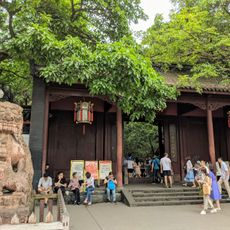
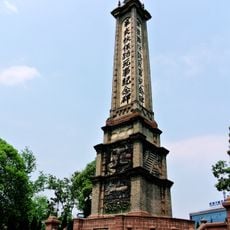
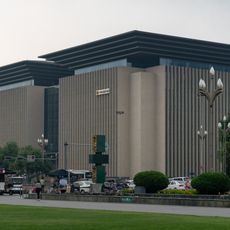
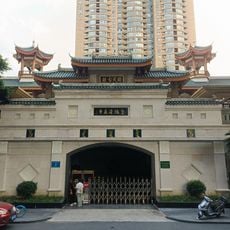
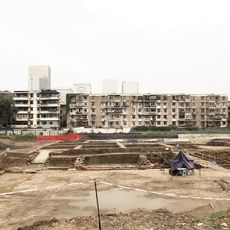
The tomb lies at 10 Yongling Road in Jinniu District, west of central Chengdu. The grave mound was rebuilt in 1983 with a retaining wall 1.3 m above ground, and drainage and ventilation were installed in the chambers between 1989 and 1990. The chambers are entered from the south side; the 2001 spirit way with its stone statues stands south of the mound.
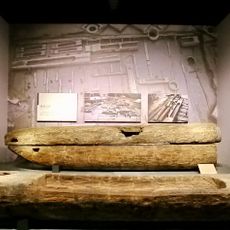
Archaeologists uncovered numerous artifacts during 1940-1943 excavations, now displayed at the Sichuan Museum. These discoveries reveal details about daily life and craftsmanship during Wang Jian's era.
The community of curious travelers
AroundUs brings together thousands of curated places, local tips, and hidden gems, enriched daily by 94,641 contributors worldwide.