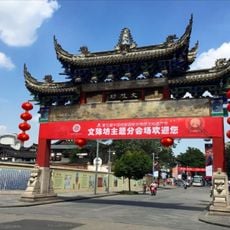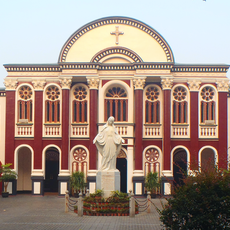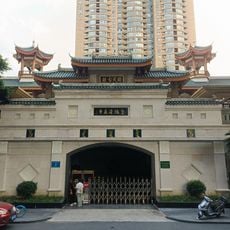
Donghuamen Site, Archaeological site in Qingyang District, China.
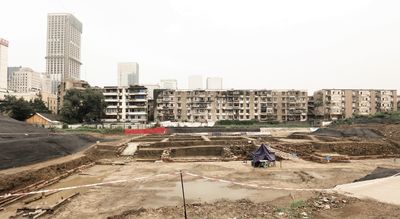
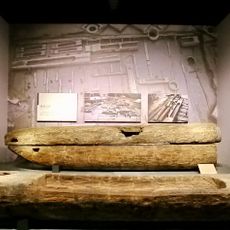
Donghuamen is an archaeological site in central Chengdu containing structural remains and artifacts from multiple historical periods. The site reveals layers of human settlement stacked on top of each other, allowing visitors to understand urban life across different epochs.
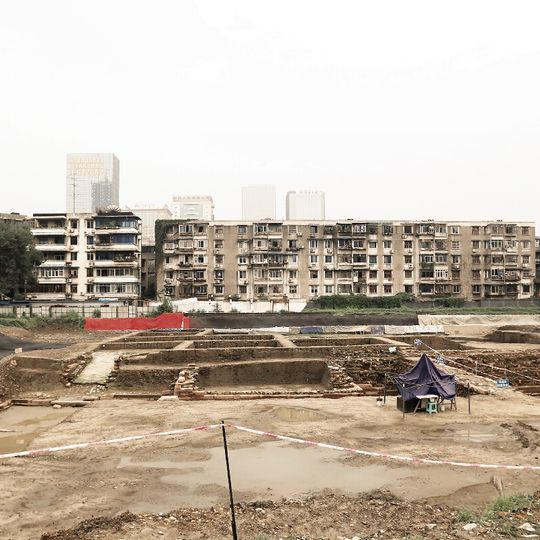
Excavations since 2013 have uncovered city structures from the Warring States Period through the Ming Dynasty. This reveals more than 2000 years of continuous human presence and development at this location.
The site displays building elements from different Chinese dynasties, including Tang Dynasty courtyards and Ming Dynasty stepped pathways in their original locations. Visitors can see these remains today and understand how different historical periods left their mark in the same place.
The outdoor section of the Donghuamen Site park opened on 20 July 2023, with three exhibition units: "Zhuangli Weiyi", "Shuidian Fenglai" and "Tianfu Zhizhong". Remains are shown in place or as reconstructions; the excavated grid of trenches lies below street level, so watch your footing on the earthen dividers and puddled low ground.
The Ming canal was found in May 2014: a 70-metre east-west channel, 45 metres north-south and about 3 metres wide, lined with red sandstone walls one metre high. Beside it, a neat platform likely served as a viewing terrace, and a two-metre-wide blue-brick path led toward the former lake.
The community of curious travelers
AroundUs brings together thousands of curated places, local tips, and hidden gems, enriched daily by 93,370 contributors worldwide.