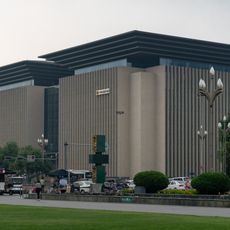
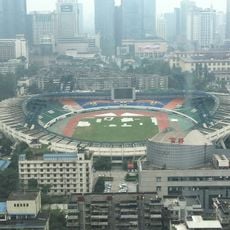
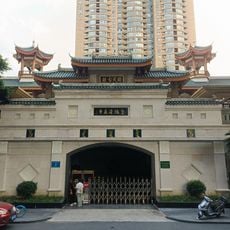
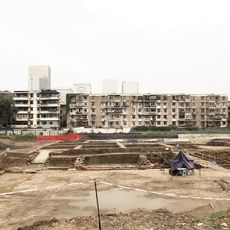
Joint tombs of boat-shaped coffins, Ancient burial site in Qingyang District, China
The joint tombs of boat-shaped coffins lie beneath the south side of Shangye Street in Chengdu's Qingyang District. The pit, oriented northeast to southwest, covers about 600 square metres within a 1,500-square-metre excavation. It held 17 coffins carved from single nanmu logs: nine boat-shaped coffins, the largest 18.8 m long, and eight rectangular log coffins about 3.3–3.8 m long. The pit was backfilled in 2010.
The tombs date to the Warring States period around 400 BCE and were discovered in 2000 when archaeologists uncovered 17 coffins from this era. This discovery provided crucial insights into burial practices of the ancient Shu region during a key phase of Chinese history.
The burial ground reflects how the Shu people honored their dead by placing them in boat-shaped wooden vessels alongside personal belongings. This practice reveals the deep connection this ancient civilization had with water and maritime traditions.
The tomb pit was backfilled in 2010, so there is no open excavation to walk through; the site sits on the south side of Shangye Street in Qingyang District, central Chengdu. Look instead for the marker of the national-level protected site and plan the visit as a short stop, since the wooden coffins and lacquerware are not on display here.
The tomb pit was backfilled in 2010, so nothing of the 17 coffins is visible above ground today. The largest boat coffin, carved from a single nanmu trunk, measures 18.8 m long, 1.5 m wide and 1.12 m high. Traces of pillars and plinths around the pit show a building once stood over the graves.
The community of curious travelers
AroundUs brings together thousands of curated places, local tips, and hidden gems, enriched daily by 94,048 contributors worldwide.