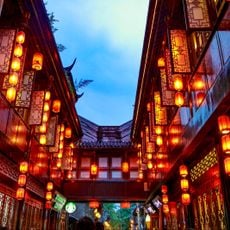
Chengdu Cultural Park
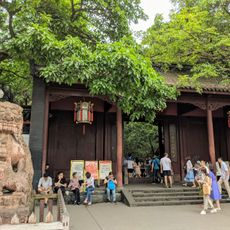
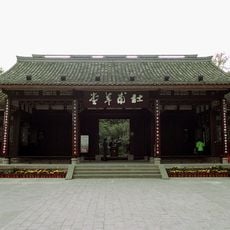
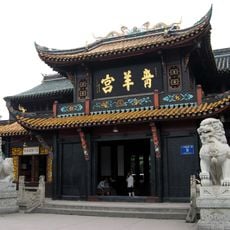
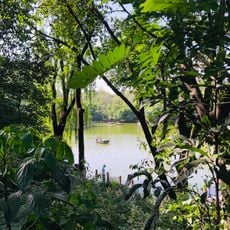
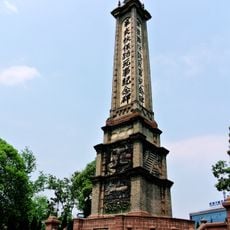
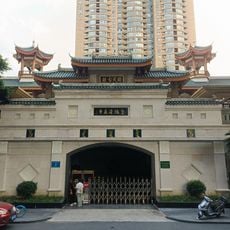
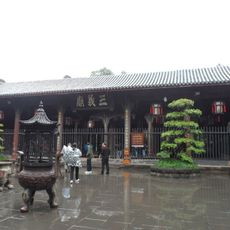
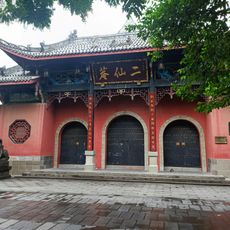
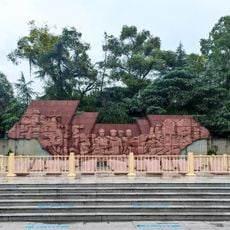
Chengdu Cultural Park is a park at 7 West Second Section, First Ring Road, Qingyang District, Chengdu, covering the grounds of Qingyang Palace and Erxian Nunnery, from which it was separated in 1982. Its Ming-dynasty octagonal pavilion was moved here in 1972 from Wuqu Palace at the city's north gate, and the Zhiji Stone was relocated from Zhiji Stone Street in 1958. The Twelve Bridges Martyrs Cemetery, where 35 people executed on 7 December 1949 are buried, lies within the grounds.
Chengdu Cultural Park was created in 1959 by expanding Qingyang Palace and Erxian Nunnery, initially named Qingyang Palace Garden. It was renamed Cultural Park in 1966, and Qingyang Palace was separated from it in 1982. The Twelve Bridges Martyrs Cemetery holds 35 people executed at Twelve Bridges on 7 December 1949, on the eve of the PLA's capture of Chengdu.
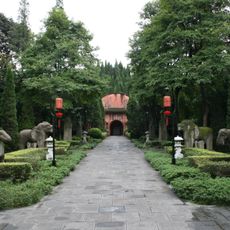
Chengdu Cultural Park hosts an annual flower fair and lantern fair, a tradition tied to the site's origin as the Qingyang Palace garden. The grounds also hold the Qing-dynasty Erxian Nunnery, once converted into a guesthouse, and the Ming-dynasty Octagonal Pavilion, moved here in 1972 from Wuqu Palace at the city's north gate.
The park is free to enter and open daily, best reached by bus or metro near Qingyang Palace station. Comfortable shoes are recommended as the grounds are extensive and offer plenty to explore on foot.
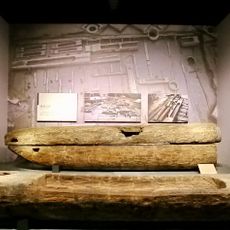
The Zhiji Stone in the park was moved here in 1958 from the mouth of Zhiji Stone Street. It is a single block of stone whose name links it to an old story of a loom stone, and it now stands among the park's historic relics rather than at its original street corner.
The community of curious travelers
AroundUs brings together thousands of curated places, local tips, and hidden gems, enriched daily by 94,290 contributors worldwide.