Liu Xiang Mausoleum, Mausoleum in Wuhou District, China
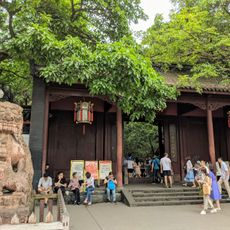
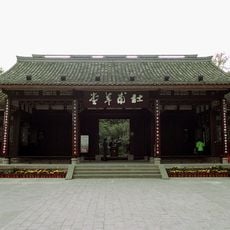
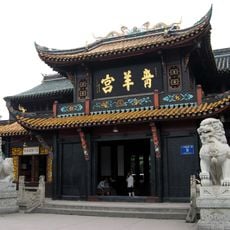
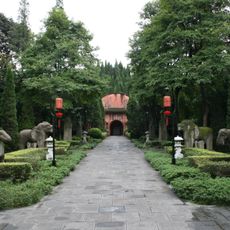
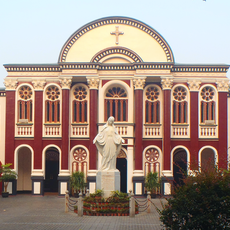
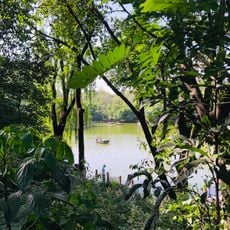
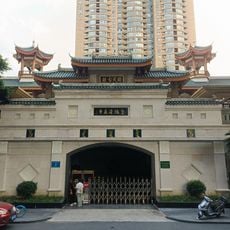
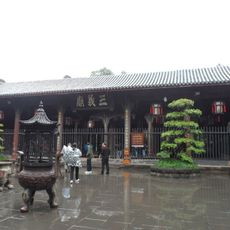
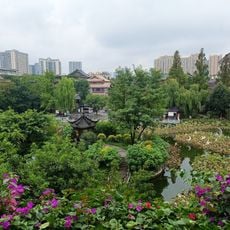
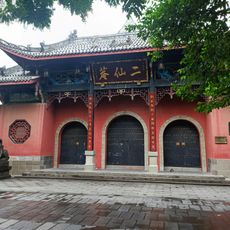
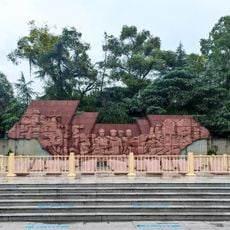
Liu Xiang Mausoleum is a burial site in Chengdu featuring traditional Chinese architecture, stone carvings, and sculptures arranged within landscaped gardens. The complex is organized around a central burial chamber with multiple zones and structures.
General Liu Xiang died in Hankou in January 1938, and his coffin was brought back to Chengdu that February. Work on the mausoleum, designed by architect Yang Tingbao, began on 20 January 1939 and the main structure was finished in the winter of 1941. In 1953 it was merged with the adjacent Wuhou Shrine to form the Southern Suburb Park, and since 2003 it has been managed by the Wuhou Shrine Museum.
The site reflects ancient Chinese burial traditions through its spatial organization and the spaces designed for honoring ancestors. Visitors can walk through these ceremonial areas and sense how they once functioned as places of remembrance.
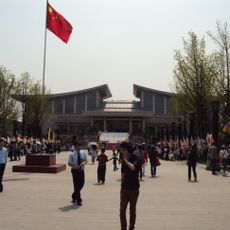
The site is open daily from morning to early evening, allowing visitors to explore the various zones at their own pace. Informational signage is available throughout to help you understand the layout and structures.
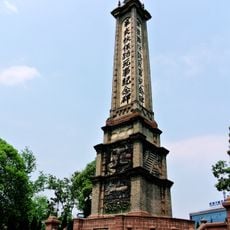
During the 1966 Cultural Revolution, Red Guards dug into Liu Xiang's reinforced-concrete tomb; after cranes lifted the slabs and broke the steel bars, his remains were cremated. A park worker secretly gathered the bones and buried them in the park. In 1985 they were recovered and placed in a cement tower on the original grave platform.
The community of curious travelers
AroundUs brings together thousands of curated places, local tips, and hidden gems, enriched daily by 93,083 contributors worldwide.