Luodongshu Temple, Ancestral hall in Chengkan village, Huangshan, Anhui, China
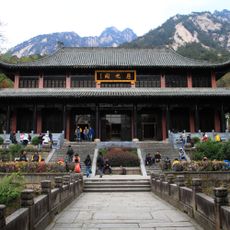
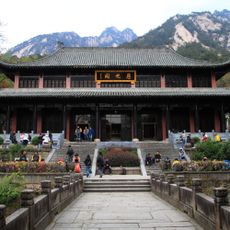
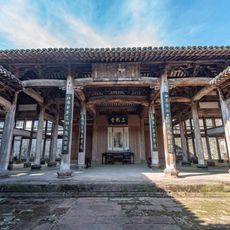
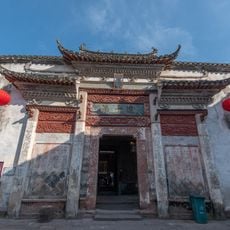
Luodongshu Temple is an ancestral hall in Hui architectural style located in Chengkan village with elegant dark roof tiles, white walls, and intricate wooden carvings on beams and doors. The interior features a large hall with ancestor statues and offerings, along with decorative patterns of clouds, flowers, and animals carved into walls and window frames.
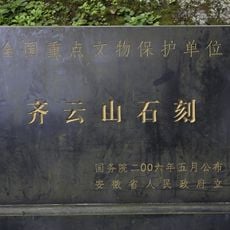
The ancestral hall was founded in the Jiajing era of the Ming dynasty by Luo Jiezong, 21st-generation ancestor of the Qian Luo lineage, who completed its rear sleeping quarters. Seventy years later, in the Wanli era, the 22nd-generation ancestor and censor Luo Yinghe added the front section from the main hall to the Lingxing Gate. It was listed as a National Key Cultural Relic Protection Unit in 1996.
The hall is dedicated to Luo Dongshu, the 13th-generation ancestor of Chengkan's Qian Luo lineage, and its name honours him as Zhenjing, "Chaste and Tranquil". It is the largest of the village's many branch ancestral halls, and its plan includes a rare women's shrine (nüci) alongside the main halls.
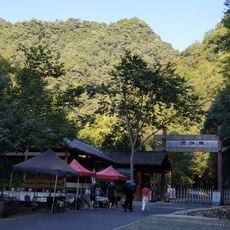
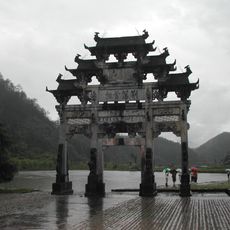
The hall stands in Chengkan village, in Huizhou District, Huangshan City, Anhui. Its plan runs from the screen wall and Lingxing Gate through courtyards and side wings to the Xiang Hall, sleeping hall and Baolun Pavilion, so allow time to walk the sequence. The structure is brick and timber, and the site is a protected national relic.
The hall's plan follows that of a Confucian temple, with a Lingxing Gate and a Baolun Pavilion, a layout rarely used for ancestral halls. It is the largest of the many branch halls of Chengkan's Qian Luo lineage, built for the 13th-generation ancestor Luo Dongshu.
The community of curious travelers
AroundUs brings together thousands of curated places, local tips, and hidden gems, enriched daily by 94,343 contributors worldwide.