Nanning Mosque, Islamic religious center in Xingning District, China.
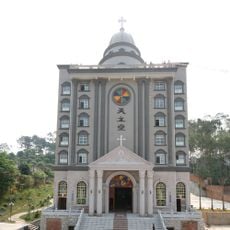
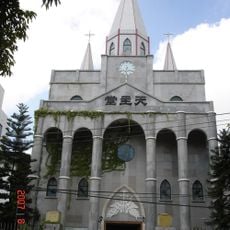
Nanning Mosque is a three-story building featuring curved roofs and arched doorways that combine Islamic design with local architectural traditions. The structure includes a restaurant space on the lower level, administrative and meeting areas in the middle, and the main prayer hall occupying the upper floor.
The mosque was founded between 1644 and 1661, during the reign of the Shunzhi Emperor of the Qing dynasty. In 1717 it was moved to its present site. It was destroyed by fire in 1857 and rebuilt in 1866, then closed and demolished during the Cultural Revolution (1966–1976) and rebuilt again in 1981.
The mosque's name in Chinese, Qingzhensi, literally means "pure and true temple", the standard Chinese term for a mosque. Its three floors divide worship from community life: a restaurant on the ground floor, meeting, office and dormitory rooms on the second, and the prayer hall for about 200 worshippers on the third.
The prayer hall occupies the third floor, while the first floor holds a restaurant and the second floor meeting, office and dormitory rooms. Visitors should time their visit around prayer sessions, when the upper floor is in use for worship.
The mosque was destroyed during the Cultural Revolution and rebuilt in 1981, so the present three-story structure with its conical roof and arched doors and windows dates from that reconstruction. Its prayer hall on the third floor holds about 200 worshippers, while the ground floor houses a restaurant.
The community of curious travelers
AroundUs brings together thousands of curated places, local tips, and hidden gems, enriched daily by 93,084 contributors worldwide.